How to Replace Worn Sisal on a Cat Tree (Without Buying a New One) — 2026
As an Amazon Associate I earn from qualifying purchases. Product details may change; verify on Amazon before purchase.
🔍 How this guide was put together (Editorial Standards)
This guide compares options using published manufacturer specifications, patterns in publicly visible owner reviews, and reputable expert sources. We do not operate a physical testing lab; see our how-we-research page for details.
| Rank | Product | Name | Why we picked it | Buy |
|---|---|---|---|---|
| Top pick |  | Hey-brother Cat Tree Tower with Tiered Padded Platforms (solid frame worth rewrapping) | Check price | |
| Runner-up |  | Globlazer F70 Pro Heavy-Duty Cat Tree Tower, 70in (thick posts for repeat rewraps) | Check price |
📑 Table of contents
The bare-wood-showing-through look — frayed strands hanging off the post, the top rope curling away from the cardboard tube underneath — isn’t a reason to throw the whole tree away. If the structure is still solid, rewrapping the posts is a one-afternoon job with a $10 roll of sisal and a hot glue gun. Here’s how, and how to tell when the tree isn’t worth saving.
When to rewrap vs replace
Rewrap when:
- The frame, base, and platforms are still stable (push-test the empty tree — no wobble).
- Sisal is worn but the post underneath (cardboard tube or wood dowel) is intact.
- The joins between platforms and posts are tight.
Replace when:
- The tree wobbles even with fresh sisal-less posts (a build problem the rope won’t fix).
- The cardboard post tube is crushed, cracked, or spongy.
- Platforms are bowing or splitting.
- Multiple posts are damaged and it’s cheaper to buy a new tree than to redo them all.
Our sturdiest cat trees guide walks through push-testing stability if you’re not sure.
What you need
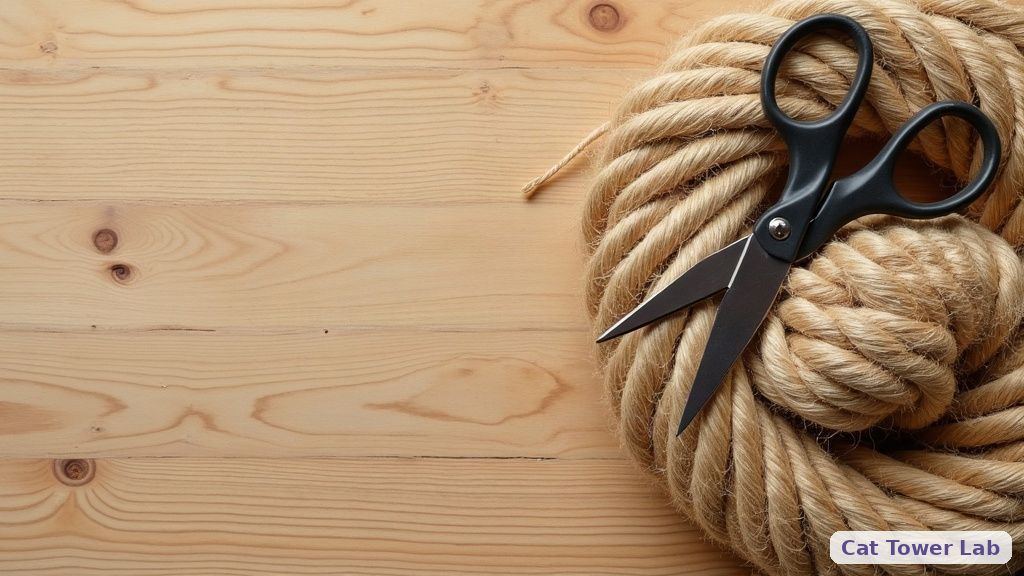
- Natural sisal rope, 1/4” (6 mm) or 3/8” (10 mm) — most trees use 1/4”. Measure the old rope thickness before buying so it looks right.
- Enough length. Rough guide: rope length ≈ post circumference × number of coils. A 12” circumference × 100 coils = ~100 feet. Buy 20% extra so you don’t run out mid-post.
- Hot glue gun + sticks, or wood glue if you prefer slower dry.
- Scissors or a utility knife.
- Painter’s tape or a rubber band to hold the first coil while glue sets.
Skip: synthetic/plastic “sisal-look” rope. Cats don’t scratch it the same way, it sheds plastic fibers, and the tree ends up unused.
The rewrap, step by step
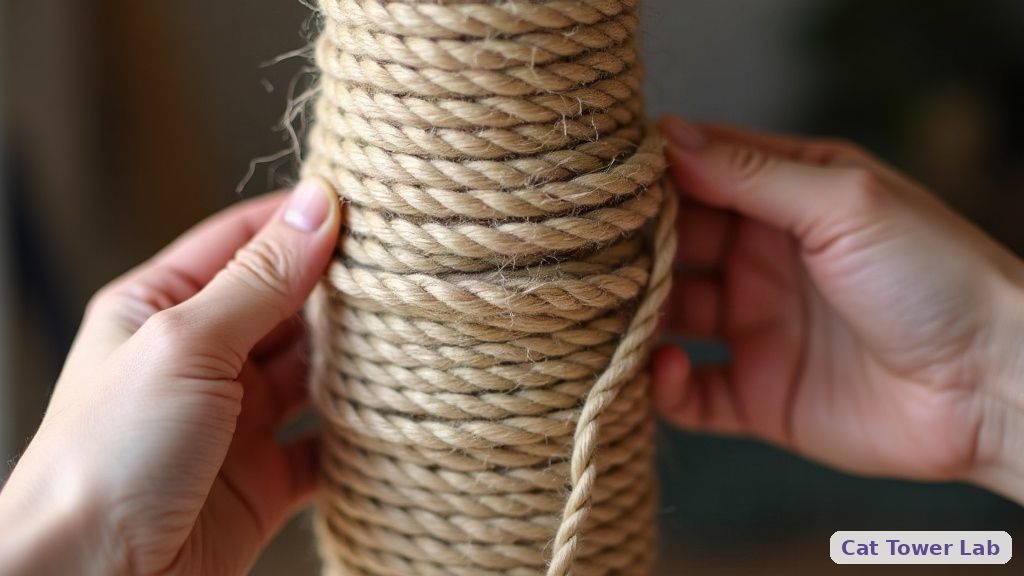
- Remove the old rope. Start at the top, cut the top loop, and unwind. Save a foot of the old rope as a size reference for the new one.
- Clean and inspect the post. Wipe with a damp cloth; let it dry. Squeeze the tube — if it deforms easily, the post itself needs replacing, not just the rope.
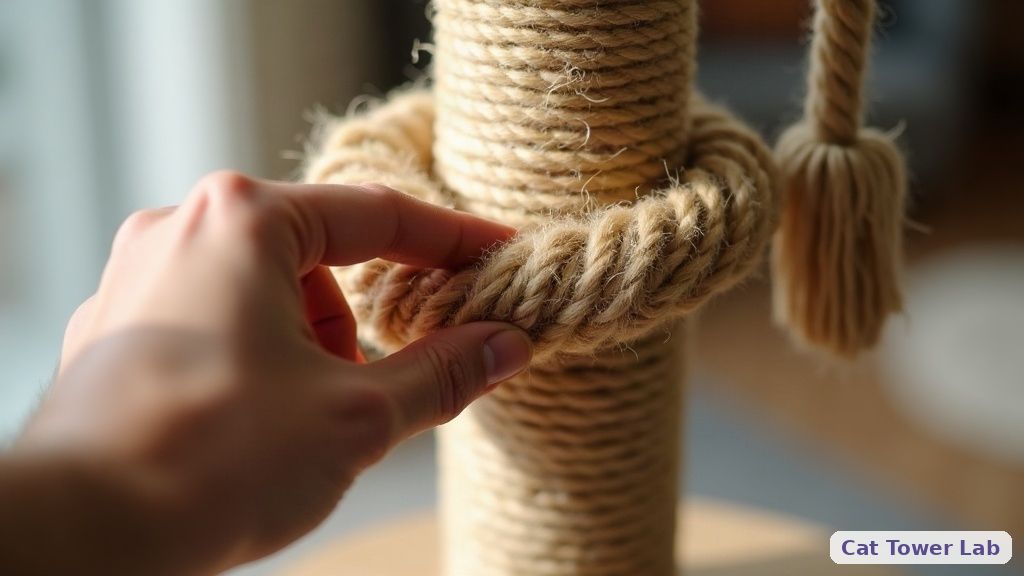
- Anchor the start. At the bottom of the post (so cats scratching downward don’t rip the anchor loose), put a bead of hot glue and press the rope end in. Tape it while it sets.
- Wrap tightly and evenly. Each new coil should sit against the last with no gap. Pull firm — loose wraps unravel fast. Every 6–8 coils, add a small dot of glue between rope and post so if one coil ever cuts, the whole thing doesn’t unwind.
- Finish at the top. Cut the rope, tuck the end under the last coil, and glue it down.
Total time: about 45–90 minutes per post once you get the rhythm.
Why glue only every few coils, not continuously?
Continuous glue makes the sisal stiff, which cats scratch less because the fibers don’t move. Spot-gluing keeps the rope flexible where they claw, but anchors it enough that a single cut strand can’t undo hours of wrapping.
How long does new sisal last?
For a single cat, expect 1–3 years of daily scratching. Multi-cat households wear it faster. Rotate which post they scratch by moving the tree slightly or placing a scratcher next to the least-used post. Our cat tree materials guide covers the durability differences across sisal, carpet, and wood.
After the rewrap
Give it a light spray of catnip water to reintroduce your cat to a “new” surface — they sometimes ignore a freshly wrapped post because the smell is gone. Within a week they’ll usually claim it again. Fold the rewrap into your regular cleaning and maintenance routine — a monthly check of sisal wear catches it before rewrap becomes urgent. If the whole tree ever gets too worn, our buying-mistakes guide helps you choose the next one so it lasts longer.
The bottom line
Rewrapping a cat tree’s sisal is one of the highest-value DIY fixes in pet ownership: a $10 roll of natural rope and 45 minutes per post extend a $150 tree by years. Save it for trees with sound frames, use natural (not synthetic) sisal, spot-glue instead of drenching, and finish the ends under a coil. Only replace the whole tree when the structure — not the rope — is what’s failing.