Best Cat Trees for Senior & Arthritic Cats: Low-Impact & Mobility Picks
As an Amazon Associate I earn from qualifying purchases. Product details may change; verify on Amazon before purchase.
The short answer
If you only want one recommendation: Hey-brother Multi-Level Low Step Cat Tree. Engineered with staggered 7.5-inch vertical step intervals, ultra-wide carpeted landing platforms, and an accessible ground-level plush cave, eliminating high-impact jumps for aging feline joints.
Check price on Amazon →🔍 How this guide was put together (Editorial Standards)
This guide compares options using published manufacturer specifications, patterns in publicly visible owner reviews, and reputable expert sources. We do not operate a physical testing lab; see our how-we-research page for details.
| Rank | Product | Name | Why we picked it | Buy |
|---|---|---|---|---|
| Top pick |  | Hey-brother Multi-Level Low Step Senior Cat Tree | Check price | |
| Runner-up |  | FEANDREA Multi-Tier Plush Cat Activity Tree with Ramp | Check price | |
| Also great |  | Armarkat Classic Solid Wood Base Accessible Perch Tree | Check price |
📑 Table of contents
Editorial Note: Curated by the Cat Tower Lab Research Team, cross-referencing veterinary orthopedic guidelines on feline degenerative joint disease (DJD), dynamic landing shock thresholds, and recurring senior pet owner evaluations.
Feline arthritis affects an estimated 90% of cats over twelve years of age, yet cats instinctively mask musculoskeletal discomfort. A cat that once sprinted effortlessly to the top of a six-foot tower may gradually stop climbing, resting solely on the floor not out of contentment, but because the vertical leap and subsequent landing impact strain inflamed hip and spinal joints.
Standard commercial cat trees feature 14-to-18-inch vertical distances between perches. For an arthritic cat, descending from such heights generates deceleration forces equal to two to three times their total body weight, causing acute joint shock. Selecting furniture designed specifically for geriatric felines requires prioritizing shallow stepping intervals, non-slip textured ramps, and pressure-relieving rest zones.
Quick Comparison: Senior-Accessible Cat Furniture
| Model | Max Step Height | Incline Assistance | Base Ballast | Primary Joint Benefit |
|---|---|---|---|---|
| Hey-brother Low Step | 7.5 inches | Staggered Spiral | 28 lbs | Prevents high-impact vertical drops |
| FEANDREA Ramp Tree | 8.2 inches | 35° Sisal Ramp | 25 lbs | Continuous friction climbing without jumping |
| Armarkat Classic Wood | 9.0 inches | Wide Stepping Tiers | 32 lbs | Ultra-stable solid wood anchors for weak hips |
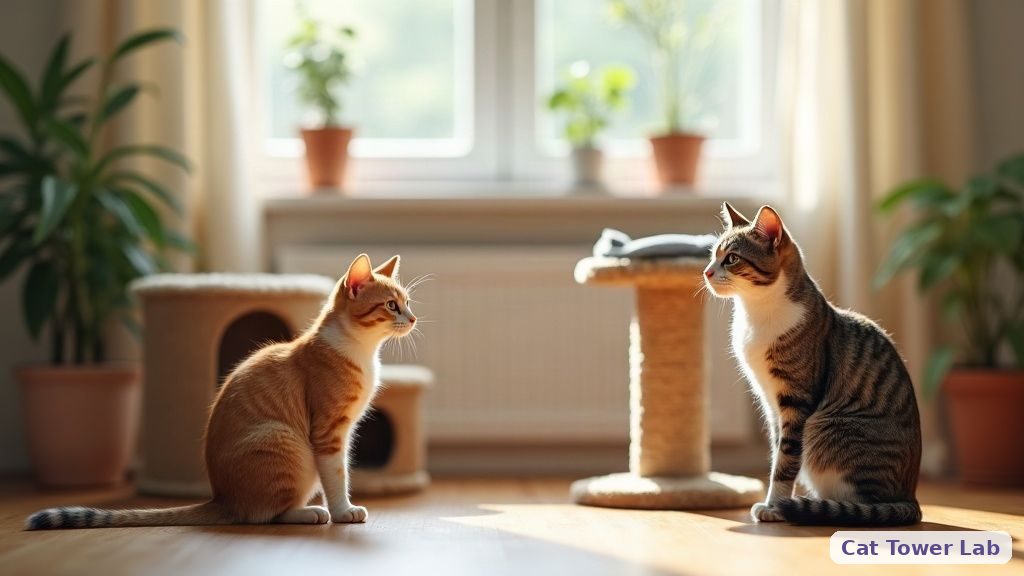
Critical Biomechanical Requirements for Aging Cats
1. Vertical Rise Per Tier (Under 8.5 Inches)
Young cats possess elastic tendon recoil allowing vertical jumps over five times their shoulder height. In contrast, cats suffering from cartilage degradation require graduated stairway transitions. Tiers spaced between 6.5 and 8.5 inches apart allow aging cats to walk upward rather than exerting explosive force through their hocks.
2. Deep Platform Landings & Orthopedic Cushioning
Narrow perches force older cats to balance precariously, tightening stiff muscles. Perches measuring at least 16 x 14 inches with high-density memory foam or deep bolsters distribute skeletal weight evenly, preventing painful pressure points on the hip joints during prolonged sleep.
3. Non-Slip Textures & Incline Ramps
Slick faux-fur fabrics cause claws to slide when feline leg strength falters. Ramps surfaced with ribbed needle-punch carpet or tightly wound natural sisal provide mechanical traction, enabling senior cats to pull themselves upward using front-paw grip rather than rear-leg thrust.
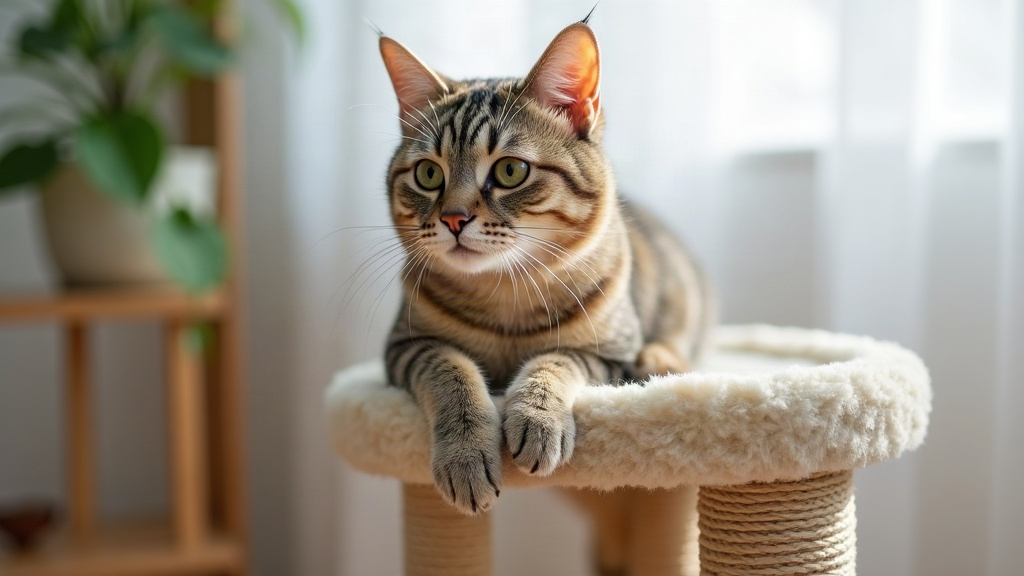
Placement and Fall-Protection Strategies
To guarantee absolute safety in your home, implement these placement best practices:
- Corner Placement: Placing a tall tower in a 90-degree wall corner eliminates two directions of potential sway.
- Wall Anchoring: Always fasten the included safety strap into a drywall anchor or wall stud.
- Carpet Leveling: If setting up over plush carpet, place carpet spikes or leveling shims under the baseplate to prevent rocking.
📚 Related In-Depth Analysis
- Compare findings with our guide on Best Cat Trees For Large Cats.
- Review structural durability benchmarks in Sturdiest Cat Trees Anti Wobble.
- Compare findings with our guide on How To Choose Cat Tree Size.
- Compare findings with our guide on Where To Place A Cat Tree.
🔧 Interactive Planning Tool
Need exact measurements for your setup? Use our Cat Tree Stability & Structural Sizing Engine to calculate tipping torque and minimum post diameter for your cat’s exact weight.
Frequently Asked Questions
Can an older cat still enjoy a tall cat tree?
Yes, provided the tree utilizes a tiered spiral stairway or ramp system. Elevating senior cats safely fulfills their deep evolutionary drive for vertical territory and survey vantage points while safeguarding aging vertebrae.
Should I place a cat tree on hardwood or carpet for a senior cat?
Place the unit against a corner on low-pile carpet or use a rubber-backed non-slip grip mat beneath the baseplate on hardwood to eliminate any micro-sliding during dismounts.
How can I encourage my arthritic cat to use a new low-step tree?
Scatter fresh catnip or place a heated orthopedic pad on the lower tiers. Avoid picking up the cat and forcing them onto upper perches, as unexpected movement can induce panic and joint guarding.
Long-Term Maintenance and Carpet Hygiene for Senior Cats
Geriatric felines frequently experience minor urine incontinence or mobility stiffness that leads to accidental litter tracking. Maintaining clean fabric surfaces without using chemical deterrents is vital for sustained use:
- Regular Vacuuming of Resting Tiers: Use a specialized pet rubber squeegee twice weekly to remove dander and loose fur from low-tier bolsters.
- Enzyme Spot Treatment: If accidents occur, apply an unscented bio-enzymatic pet cleaner directly to the carpet pile to permanently eliminate uric acid crystals without leaving harsh chemical residues that deter sensitive older cats.
- Hardware Bolt Re-Torquing: Inspect the baseplate connection bolts every three months using an Allen key. Even minor wobble can trigger severe anxiety in an older cat with compromised balance.