How to Clean and Maintain a Cat Tree (So It Lasts Years) — 2026 Guide
As an Amazon Associate I earn from qualifying purchases. Product details may change; verify on Amazon before purchase.
🔍 How this guide was put together (Editorial Standards)
This guide compares options using published manufacturer specifications, patterns in publicly visible owner reviews, and reputable expert sources. We do not operate a physical testing lab; see our how-we-research page for details.
📑 Table of contents
- The weekly 5-minute routine
- The monthly deeper clean
- Deodorising safely
- Spot-cleaning common issues
- Repairs that extend life
- When to replace rather than repair
- Multi-cat home maintenance
- Yearly deep audit
- What owners commonly get wrong
- Extending life: the small habits that add years
- Frequently asked questions
A cat tree is a magnet for fur, dust, dander, and the occasional hairball or worse. A little routine maintenance keeps it hygienic, comfortable for the cat, and — most importantly — safe and stable for years. This guide covers the weekly 5-minute routine, monthly deeper clean, how to spot-clean stains, when and how to repair, and the honest signs it’s time to replace rather than fix.
How often should you clean a cat tree?
- Weekly (5 min): de-fur, quick vacuum, wipe posts, safety scan.
- Monthly (20 min): full vacuum, spot-clean stains with enzymatic cleaner, re-tighten bolts, check sisal.
- Yearly (30 min): deep audit — full inspection, hardware re-tighten, wear check with a comparison photo.
- Extra pass if there’s an accident (urine/vomit) or a new cat joins.
Skip the weekly for a month and fur mats permanently in the plush; skip the monthly bolt-check and the tree slowly loosens into a wobble. The routine is about small, cheap habits — not a big cleaning day.
The weekly 5-minute routine
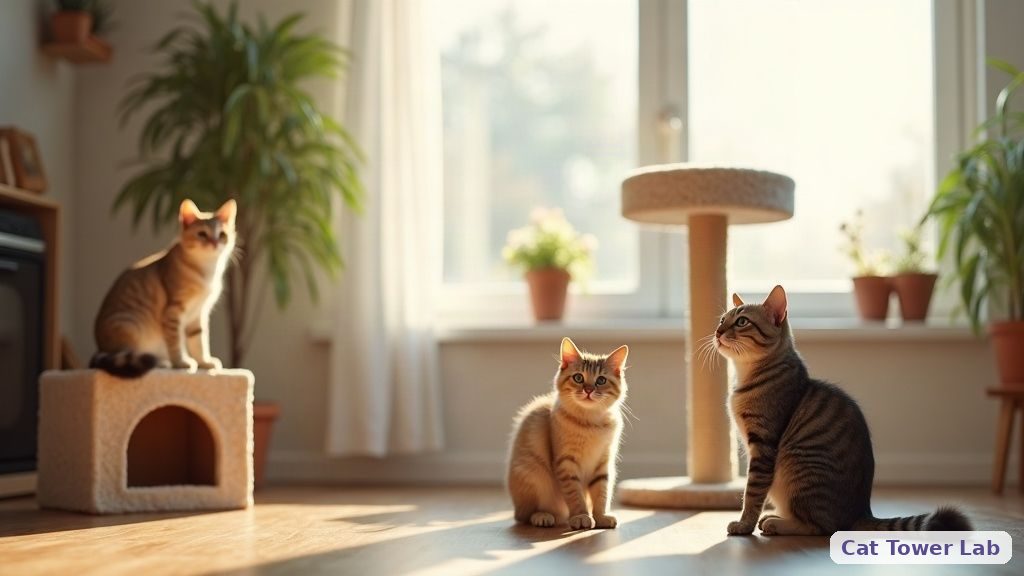
Do this every 5-7 days and your tree stays significantly cleaner without effort:
- De-fur with a rubber brush or damp rubber glove — this lifts embedded fur far better than a lint roller or dry cloth. Roll over every fabric surface, working with the pile direction.
- Vacuum the platforms with an upholstery attachment, including under the perches and around the base.
- Shake out or swap any removable blankets — most owners keep a dedicated blanket on the top perch and rotate weekly.
- Quick wipe the sisal posts with a slightly damp cloth to lift dust.
- Visual safety scan — anything loose, torn, or worn? Note for the monthly deep-clean.
Total time: ~5 minutes. Skip a few weeks and it becomes a 30-minute job.
The monthly deeper clean
Once a month, add these steps:
- Full vacuum with upholstery attachment, including crevices and underside of perches.
- Spot-clean any stains with a pet-safe enzymatic cleaner — enzymatic matters for urine, vomit, or scent-marking because it breaks down odour molecules rather than just masking them. Test on a hidden area first.
- Re-tighten every bolt from underneath the base. Trees loosen with use and re-tightening dramatically extends life. See our stability guide for why this matters.
- Check sisal ends — any loose or unravelling? Re-glue with pet-safe adhesive before they get worse.
- Wipe down the base and legs with a damp cloth + drop of mild dish soap.
Deodorising safely
Cat trees develop mild smells over months. Safe approaches:
- Baking soda dusting: sprinkle lightly on fabric, leave 15 minutes, vacuum off. Freshens without chemicals.
- Air the tree in sunlight when possible — UV kills a lot of odour bacteria.
⚠️
What NOT to useAvoid strong scented sprays, citrus, or essential-oil-based cleaners near cats — many essential oils (tea tree, eucalyptus, citrus, peppermint) are toxic to cats even in small amounts. The ASPCA's toxic-substances list covers the specific ones to keep away from cats and cat surfaces.
Spot-cleaning common issues
Cat vomit: blot immediately with paper towel; enzymatic cleaner; blot dry; sprinkle baking soda; vacuum.
Urine (marking): enzymatic cleaner is mandatory — regular cleaners leave the “signal” scent that invites re-marking. Address the underlying cause (stress, new pet, litterbox issue) or it recurs.
Blood spots (small scratches): cold water + mild soap; never hot water (sets stain). Blot, don’t rub.
Fur mats in plush: gentle brush with a slicker, then a rubber brush to lift loose fur. Don’t yank — you’ll damage the fabric.
Repairs that extend life
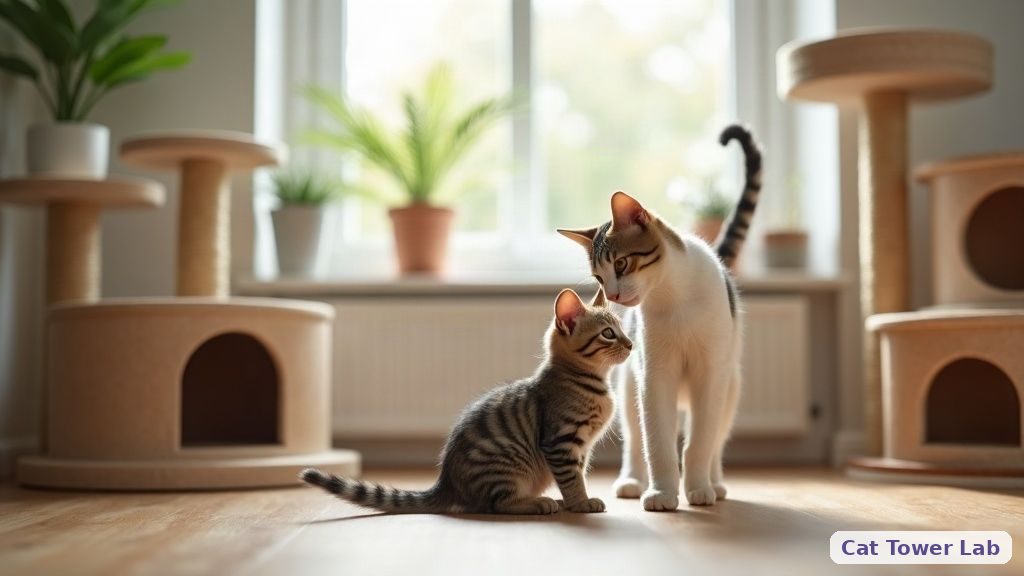
Most tree failures are fixable:
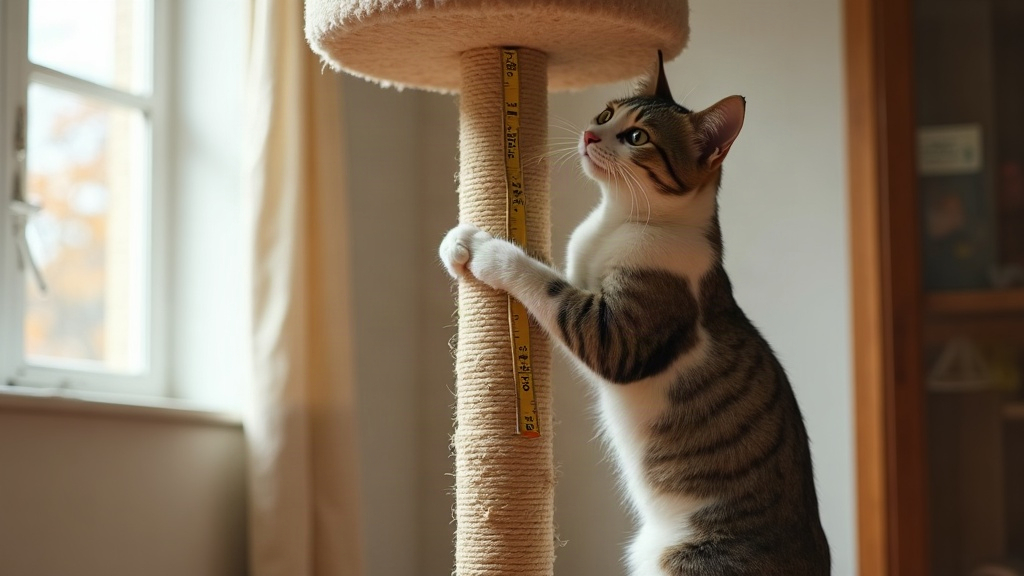
- Fraying sisal ends: tuck the loose end and re-glue with pet-safe adhesive. If a whole post is bare, buy sisal rope by the metre and re-wrap — 15-minute job, dramatically extends life.
- Loose bolts: re-tighten from underneath. Standard tools; no special parts. Do this every relatively quickly on a well-used tree.
- Sagging perch: cut a thin plywood board slightly smaller than the perch, slide under the fabric to add support.
- Loose fabric edge: staple gun with 6mm staples underneath, out of paw reach.
- Wobble on carpet: add a plywood board (1.5-2 cm thick) under the base — spreads load, stops rocking.
When to replace rather than repair
Some issues mean the tree is done. Honest signs:
- Core cracked or water-damaged — structural failure isn’t fixable.
- Base has warped — no amount of re-tightening restores stability.
- Wobble persists after re-tightening + wall strap + plywood — the design is inadequate for your setup.
- Sisal is worn to the core on every post and re-wrapping would cost more than a new tree.
- Fabric is worn through everywhere and re-covering isn’t practical.
- Your cat has aged out — kitten tree for a senior, or vice versa. Different tree, different life stage. See our life-stage guide.
Multi-cat home maintenance
Multiple cats = 2-3× the fur. Adjustments:
- De-fur twice weekly, not weekly.
- Enzymatic cleaner in stock at all times for accidents.
- Check hardware more often (monthly instead of quarterly) — more weight/force per week.
- Rotate blankets so you’re not washing constantly — 3 blankets on rotation = one always clean.
Yearly deep audit
Once a year, do a full inspection:
- Unload the tree of everything removable.
- Full vacuum every crevice.
- Wipe down every hard surface.
- Re-tighten all hardware.
- Check the underside of the base for cracks or water damage.
- Assess fabric wear — where it’s thinning, will it last another year?
- Take a photo to compare against last year’s inspection.
The photo comparison is surprisingly useful — you notice gradual wear you’d otherwise miss.
What owners commonly get wrong
- Waiting too long between cleanings — hair mats become impossible to remove.
- Using scented “pet” sprays — many contain essential oils cats shouldn’t breathe.
- Ignoring loose bolts — small wobble becomes big wobble becomes tip-over risk.
- Machine-washing fabric parts — most cat-tree covers aren’t designed for it; they mat and lose shape.
- Buying cheap replacement blankets — thin fabric mats in weeks.
Extending life: the small habits that add years
- Keep a dedicated rubber brush hanging on the wall next to the tree — makes weekly de-furring a 90-second habit.
- Rotate the tree’s orientation every few months so wear is even.
- Re-tighten bolts every season change (4× a year) — easy to remember.
- Replace the top-perch blanket annually rather than trying to save it once it’s matted.
Frequently asked questions
How often should I replace a cat tree? With this routine, longer is realistic for a quality tree. Cheap trees fail within over time regardless of maintenance.
Can I machine-wash the removable covers? Usually no — even “dishwasher safe” cat-tree fabric mats. Hand-wash with soap and water; air-dry.
What’s the best cleaner for cat-tree fabric? Pet-safe enzymatic cleaner for stains, warm soapy water for general dirt, baking soda for odours. Skip harsh chemicals.
My cat suddenly stopped using the tree — could it be a cleaning issue? Yes — a strong smell (their own or a new one) can make them avoid it. Do a full deep-clean + air out for a day.
Are old cat trees a hygiene risk? If maintained, no. Ignored trees can develop mould in wet areas (rare) or become a flea/parasite habitat if the cat has an untreated infestation.
Related: safety checklist · materials guide · sturdiest anti-wobble trees *