Why Does My Cat Scratch the Couch Instead of the Scratching Post?
As an Amazon Associate I earn from qualifying purchases. Product details may change; verify on Amazon before purchase.
🔍 How this guide was put together (Editorial Standards)
This guide compares options using published manufacturer specifications, patterns in publicly visible owner reviews, and reputable expert sources. We do not operate a physical testing lab; see our how-we-research page for details.
📑 Table of contents
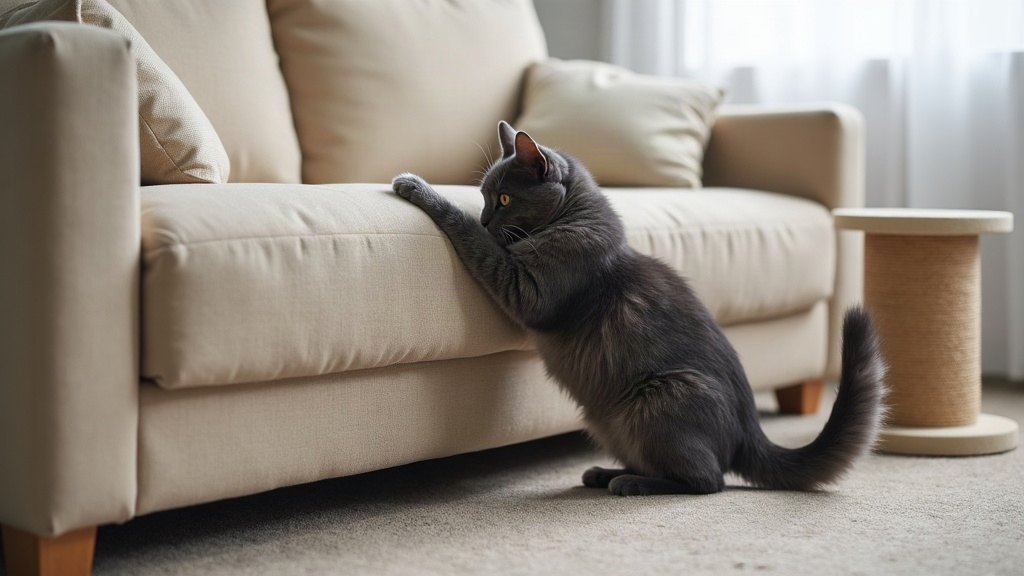
Short answer: Your cat scratches the couch because the couch is in the right place, has the right feel, and matters socially—while the scratching post fails on one or more of those counts. This isn’t stubbornness; it’s rational cat logic.
Cat behaviorist Jackson Galaxy puts it bluntly: “Scratching is not about the object—it’s about the location and the message.” Your cat isn’t trying to annoy you. They’re leaving visual and scent marks in spots that matter to them. The couch sits in your living room—the social hub of your home—which makes it prime territory worth marking.
Why the couch beats the scratching post
1. Location, location, location
Cats scratch to communicate ownership. They want their marks where the action is—near doorways, in rooms where the family gathers, along paths they walk daily.
Pam Johnson-Bennett, author of Think Like a Cat, explains: “Cats don’t want to scratch in a back corner or closet. They want their marks seen by the household.”
Your couch is probably:
- In the living room (high-traffic social space)
- Near where you sit and spend time
- Along pathways your cat uses
Your scratching post is probably:
- In a corner
- In a spare room
- Hidden because it “looked ugly”
That’s why the couch wins. You put the scratching post where you wanted it. Your cat put their marks where they needed them.
2. Texture and resistance matter
Cats prefer textures that let claws dig in and drag with satisfying resistance. Upholstery fabric often delivers exactly that—better than some scratching posts.
Jackson Galaxy notes that many posts fail because they’re covered in carpet loops that snag claws uncomfortably, or they’re made of materials that don’t give the right feedback. Your couch’s woven fabric might simply feel better under your cat’s claws.
3. Stability is non-negotiable
Cats need to stretch and pull against resistance. A wobbly post that tips or scoots when used is useless—worse than useless, because it teaches your cat that posts can’t be trusted.
Your couch doesn’t move. Your lightweight scratching post does. Case closed.
4. Vertical preference ignored
Many cats prefer to scratch vertically while stretching fully upright. If your scratching post is too short for a full stretch, your couch arm—at the perfect height—becomes the obvious alternative.
Pam Johnson-Bennett recommends posts be tall enough that your cat can stretch to full extension. For most adult cats, that means at least 32 inches.
How to make the scratching post win
You don’t need new products—you need better placement and setup. Here’s what behaviorists recommend:
Move the post to where the couch is
If your cat scratches the couch arm, put the scratching post right next to that couch arm. Not across the room. Not “nearby.” Literally touching the couch if possible.
Jackson Galaxy calls this “placing the post in the scent soaker zone”—where your cat already wants to mark. Once they’re using the post consistently, you can gradually move it a few inches at a time to a nearby (but still socially central) spot.
Make the post more stable
If the base is too small or light, stabilize it:
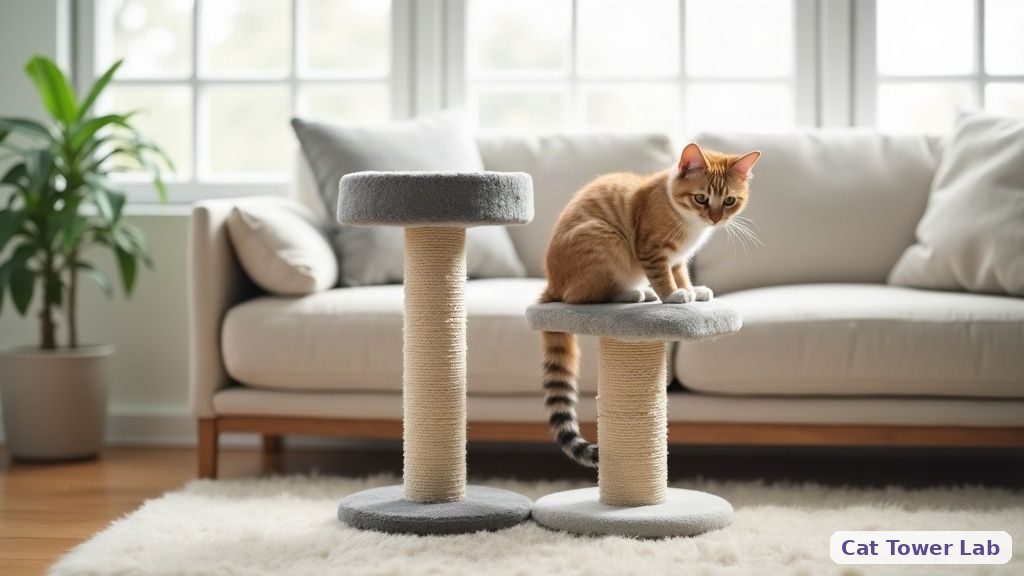
- Place it against a wall so it can’t tip backward
- Add weight to the base (a heavy book, a sandbag, or mounting it to a board)
- Choose floor-to-ceiling tension posts if possible—they can’t wobble
Cover the couch temporarily
Make the couch less appealing while the post is right there as an alternative:
- Double-sided tape on scratched areas (cats dislike sticky paws)
- Aluminum foil draped over armrests (annoying sound and texture)
- A fitted cover or blanket tucked tightly (removes the satisfying dig)
This isn’t punishment—it’s redirection. You’re making one option worse while making the better option obvious and convenient.
Add scent motivation
Sprinkle catnip on the post or use a spray attractant. Rub a cloth on your cat’s cheeks, then rub it on the post to transfer familiar facial pheromones. This makes the post smell like “theirs.”
Reward, don’t punish
When your cat uses the post, reward immediately—treats, praise, play. Pam Johnson-Bennett emphasizes that punishment for scratching furniture backfires: it teaches cats to scratch when you’re not around, not to stop scratching.
The real problem: post placement reflects human priorities
Most scratching post failures come from the same root cause: the post was placed for human aesthetics, not feline behavior.
Behaviorists agree that posts belong:
- Near furniture cats already scratch
- In social areas, not hidden corners
- Along travel paths (doorways, hallways)
- By windows or perches where cats survey territory
If you’re hiding the post because it’s ugly, that’s the real issue—and the solution is finding a post that works in visible spaces, not banishing it to where cats won’t use it.
When you might need more than a post
A standalone scratching post may not be enough if your cat:
- Wants to climb and perch (they need vertical territory, not just scratching)
- Shares the home with other cats (multiple scratching stations reduce conflict)
- Has a lot of energy to burn (they need play and enrichment, not just claw maintenance)
In these cases, a cat tree with built-in scratching posts might serve better. For a breakdown of when a tree is worth the space versus when a simple post is enough, see our guide: Cat Tree vs Scratching Post: Do You Need Both?
Step-by-step: redirect scratching in one week
- Day 1: Move the scratching post directly next to the couch spot your cat scratches. Add catnip.
- Day 1-3: Cover the couch scratch zone with tape or foil. Make it unpleasant.
- Daily: When your cat uses the post, reward immediately with treats and praise.
- Day 4-7: Once the post is being used consistently, move it 6 inches away from the couch. Repeat every few days.
- Week 2+: Keep the post in a socially central spot (not a hidden corner). Remove couch covers once the habit is established.
For more ways to encourage scratching post use and protect furniture, see: How to Train Your Cat to Use a Cat Tree
Summary
Your cat isn’t being difficult. They’re following feline logic: scratch where it counts, on surfaces that feel good, on objects that don’t move. The couch meets all three criteria; your scratching post probably doesn’t.
Fix placement first. Make the post stable and tall enough. Remove competition temporarily. Reward success. Within a week or two, most cats redirect—no new purchases required.
As Jackson Galaxy summarizes: “Meet the cat where they are. Then move them where you want them.”
Sources
- [Jackson Galaxy: How to Stop Your Cats From Scratching Furniture](https://jacksongalaxy.com/blogs/news/how-to-stop-your-cats-from-scratching-furniture)
- [Pam Johnson-Bennett: Why Does My Cat Scratch the Furniture?](https://catbehaviorassociates.com/why-does-my-cat-scratch-the-furniture/)