How Many Scratching Posts Does a Cat Tree Need?
As an Amazon Associate I earn from qualifying purchases. Product details may change; verify on Amazon before purchase.
🔍 How this guide was put together (Editorial Standards)
This guide compares options using published manufacturer specifications, patterns in publicly visible owner reviews, and reputable expert sources. We do not operate a physical testing lab; see our how-we-research page for details.
📑 Table of contents
Minimum recommendation: At least two full-length sisal-wrapped posts for a single cat, three or more for multi-cat homes. Most cat trees have 4-6 posts, but only 1-2 are wrapped in sisal — the rest are carpet or bare. That’s not enough scratching surface for active scratchers.
Why cats need multiple scratching surfaces
Scratching is a biological need, not a preference. According to Cornell Feline Health Center, scratching serves three purposes: removing claw sheaths, depositing scent from paw glands, and stretching muscles (Cornell — Destructive Behavior).
A single scratching post gets saturated with scent quickly. Cats then look for fresh surfaces — which is when they turn to your furniture. Multiple posts on a tree give them options.
Post count by tree size
| Tree height | Minimum sisal posts | Recommended for active scratchers |
|---|---|---|
| Under 48 in | 1-2 posts | 2 full-length posts |
| 48-60 in | 2-3 posts | 3 full-length posts |
| 60-72 in | 3-4 posts | 4 full-length posts |
| 72+ in | 4+ posts | 5+ full-length posts |
“Full-length” means the entire post is sisal-wrapped, not just the bottom 12 inches. Partial wrapping isn’t useful — cats stretch their full body length when scratching.
Material matters: sisal vs carpet vs jute
Sisal rope (best):
- Durable, resists shredding
- Satisfying texture for claw maintenance
- Lasts 2-5 years under heavy use
Jute rope:
- Softer than sisal, less durable
- Some cats prefer the texture
- Needs replacement more often
Carpet-wrapped posts (worst):
- Teaches cats that carpet is scratchable
- Shreds quickly, looks ragged within months
- Harder to replace when worn
Bare wood/particleboard:
- Not a scratching surface — just structure
Most budget trees have mostly carpet posts with 1-2 sisal posts. That’s inadequate. Look for trees with all structural posts wrapped in sisal.
Post placement on the tree
Where posts are positioned matters as much as quantity:
Base level: At least one full-length post cats can scratch while standing on the floor. This is the most-used position.
Mid-level: Posts connecting platforms give cats scratching access while climbing.
Multiple angles: Vertical posts for stretch-scratching, angled posts or horizontal surfaces for variety.
✅
Placement test: Can your cat reach a scratching surface without climbing to a specific level? If all scratching surfaces require climbing first, add a standalone scratcher at floor level.
Multi-cat considerations
In multi-cat homes, cats distribute scratching across different posts to mark separate territory. Cornell notes that scratching has a scent-marking component (Cornell — Destructive Behavior) — cats re-scratch areas with their own scent.
Multi-cat rule: Number of sisal posts ≥ number of cats. Three cats need at least three full-length sisal posts to avoid competition and furniture scratching.
Supplementing an under-equipped tree
If your tree has inadequate scratching surfaces:
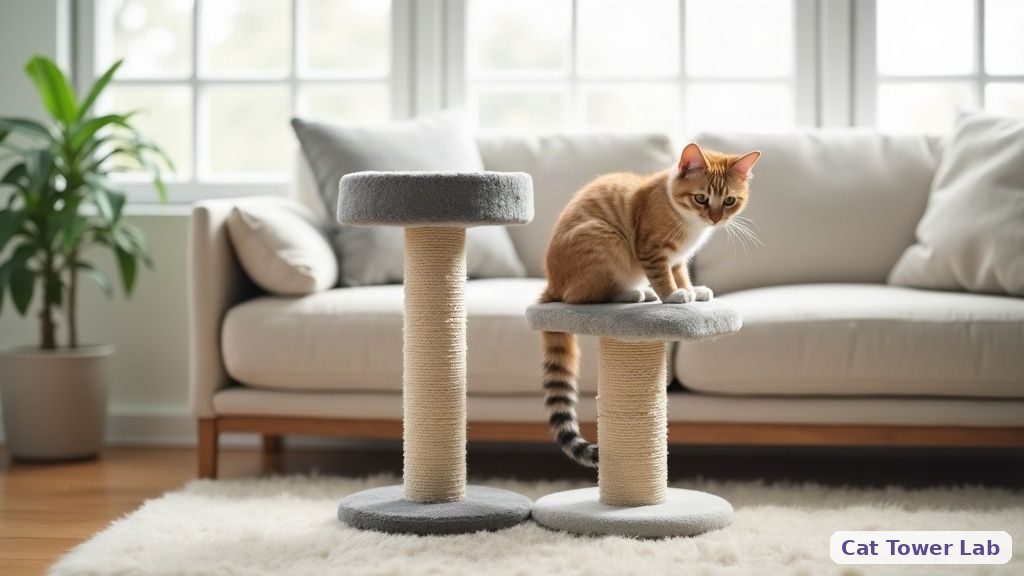
Add standalone scratchers:
- Vertical sisal posts (floor-mounted)
- Horizontal cardboard scratchers
- Wall-mounted sisal boards
Replace carpet posts with sisal:
- Some tree brands sell replacement posts
- DIY: wrap existing posts with sisal rope
See our cat tree vs scratching post comparison for standalone options.
Post diameter for different cat sizes
Standard cats (under 12 lb): 2.5-3 inch diameter posts
Large breeds (12-20+ lb): 3.5-4 inch diameter posts. Maine Coons and Ragdolls need thicker posts that don’t wobble under aggressive scratching.
Thin posts under 2.5 inches flex during scratching, which some cats find unsatisfying. They’ll use furniture instead.
When posts need replacement
Signs a scratching post is worn out:
- Sisal rope unraveling or hanging loose
- Rope flattened and smooth (no longer catches claws)
- Cat avoiding the post they previously used
- Post wobbling from loosened rope
Most sisal posts last 2-5 years. Heavily used posts need replacement sooner. See our replacing worn sisal guide for DIY instructions.
Frequently asked questions
My tree has 6 posts but my cat still scratches furniture. Why? Check how many are actually sisal-wrapped vs carpet. Also check post accessibility — if posts are hard to reach, cats find easier surfaces elsewhere.
Do cats prefer vertical or horizontal scratching? Individual preference varies. Most cats use both. Observe your cat: if they scratch carpets (horizontal) more than doorframes (vertical), add horizontal scratchers.
Can I train a cat to use only the tree’s posts? Yes. Place the tree near furniture they currently scratch, use catnip on the posts, and reward use with treats. Redirect scratching with positive reinforcement, not punishment (Cornell — Destructive Behavior).
How tall should scratching posts be? At least as tall as your cat stretched out on hind legs. For most cats, that’s 28-32 inches minimum. For Maine Coons, 36+ inches.
Related: cat tree vs scratching post · how to replace worn sisal · why cat scratches couch not post