Should I Buy a Cat Tree Before or After Adopting? A Timing Guide (2026)

As an Amazon Associate I earn from qualifying purchases. Product details may change; verify on Amazon before purchase.
🔍 How this guide was put together (Editorial Standards)
This guide compares options using published manufacturer specifications, patterns in publicly visible owner reviews, and reputable expert sources. We do not operate a physical testing lab; see our how-we-research page for details.
📑 Table of contents
Short answer: Buy a basic cat tree before you bring your cat home. Having vertical space ready on day one gives your new cat an immediate safe zone during a stressful transition. You can always upgrade later once you learn their specific preferences—but waiting means your cat spends those critical first days without a claimed territory of their own.
Here’s the case for each approach, the behavioral reasoning behind our recommendation, and how to adapt if you’re adopting a cat with known special needs.
The case for buying before you adopt
Immediate “base camp” territory
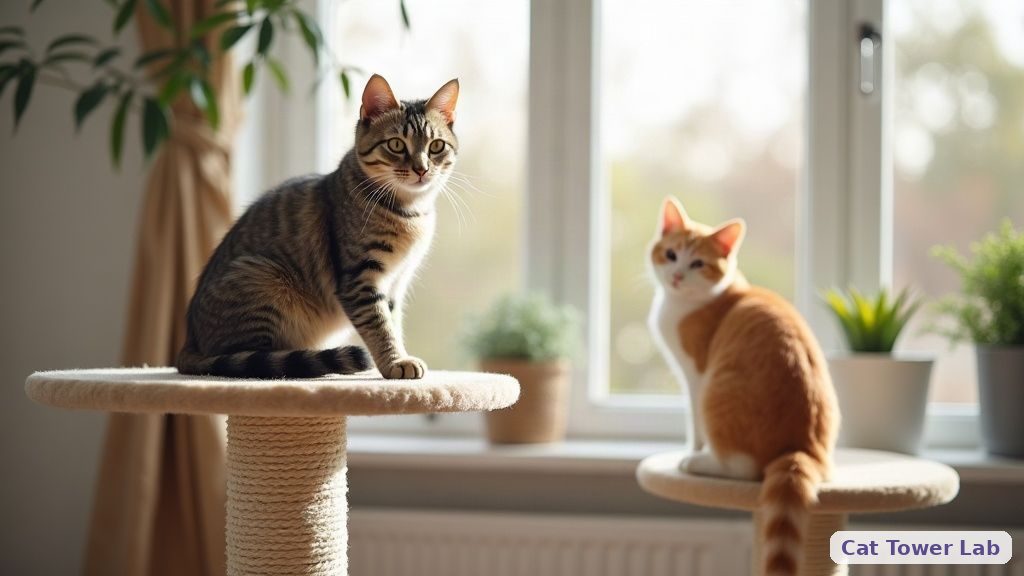
Cat behaviorist Jackson Galaxy emphasizes the concept of “base camp”—the single room where a new cat starts its life in your home. A cat tree placed in base camp gives the cat vertical territory from the moment they arrive. Height equals safety for cats; a perch three or four feet off the ground lets a nervous newcomer observe the room without feeling exposed.
The ASPCA and most shelter adoption counselors recommend having vertical space ready before bringing a cat home. The reasoning is simple: the initial period after arrival are when cats are most stressed and most likely to hide. A cat tree offers an alternative to hiding under the bed—a spot where the cat can feel secure while still remaining visible and engaged with the household.
Scent-soaking starts immediately
Cats claim territory through scent. A tree that’s present from day one begins absorbing your new cat’s scent right away, making it feel “theirs” faster than furniture introduced later. Jackson Galaxy’s “scent-soaking” concept relies on this: the more objects that carry a cat’s scent, the more confident they feel in the space.
Reduces stress behaviors
A cat without vertical options may redirect anxiety into scratching furniture, over-grooming, or hiding for extended periods. The vertical escape route of a cat tree addresses the behavioral need before the problem behavior starts.
The case for waiting until after adoption
You can observe preferences first
Not all cats are climbers. Some cats—particularly senior cats, low-energy breeds like Persians, or cats with mobility issues—prefer floor-level hideaways. Spending a week or two with your new cat before buying lets you learn whether they’re a vertical explorer or a ground-dweller.
Texture and style preferences vary
Some cats prefer sisal rope; others like carpet or bare wood. If you wait, you can watch where your cat scratches (doorframes, carpet edges, furniture corners) and choose a tree with matching textures. This reduces the risk of buying a tree your cat ignores.
Budget efficiency
Adoption fees, supplies, and vet visits add up quickly. Waiting lets you spread costs and make a more informed purchase rather than buying something that turns out to be wrong for your cat’s size or behavior.
Our recommendation: Buy a basic tree before, upgrade after
The behavioral benefits of having vertical space on day one outweigh the risk of mis-matching preferences. Here’s the practical approach:
-
Before adoption: Get a mid-range tree with at least two platforms, one enclosed space (condo or cubby), and sisal scratching posts. Don’t overspend—this is your “starter” tree.
-
During the first month: Observe your cat. Do they climb to the highest perch or stay low? Do they use the enclosed condo or avoid it? Do they scratch the sisal or ignore it?
-
After 4–6 weeks: If your cat turns out to be a floor-dweller, you can add a cat cave or heated bed at ground level. If they’re a climber who’s outgrown the starter tree, upgrade to a taller model matched to their demonstrated preferences.
This approach follows Jackson Galaxy’s guidance: provide what cats need instinctively (height, hiding spots, scratching surfaces), then adjust based on individual behavior.
Special cases
Adopting a senior cat
If you’re adopting a cat over 10 years old or one with known arthritis, prioritize low platforms (around 12–18 inches) with wide, stable surfaces. Stairs or ramps help seniors access perches without jumping. Having this ready before arrival matters even more—older cats are often more stressed by environmental change than younger ones.
Adopting a cat with a known behavior profile
Shelters and rescues often provide behavioral notes: “loves to climb,” “prefers hiding,” “bonded with another cat.” Use these notes. A cat described as a climber warrants a taller tree; a cat described as timid may benefit more from an enclosed condo at low height.
Multi-cat household
If you already have cats, place the new tree in the new cat’s base camp—separate from existing cat furniture. This prevents territorial conflict and gives the newcomer their own claimed space. Our guide on how to get your cat to use a cat tree covers introduction strategies for reluctant adopters.
What to prioritize in a “before adoption” purchase
Since you’re buying without full knowledge of your cat’s preferences, focus on:
- Stability: A wobbly tree will scare a nervous new cat and create a bad first impression. Look for a wide base and solid construction.
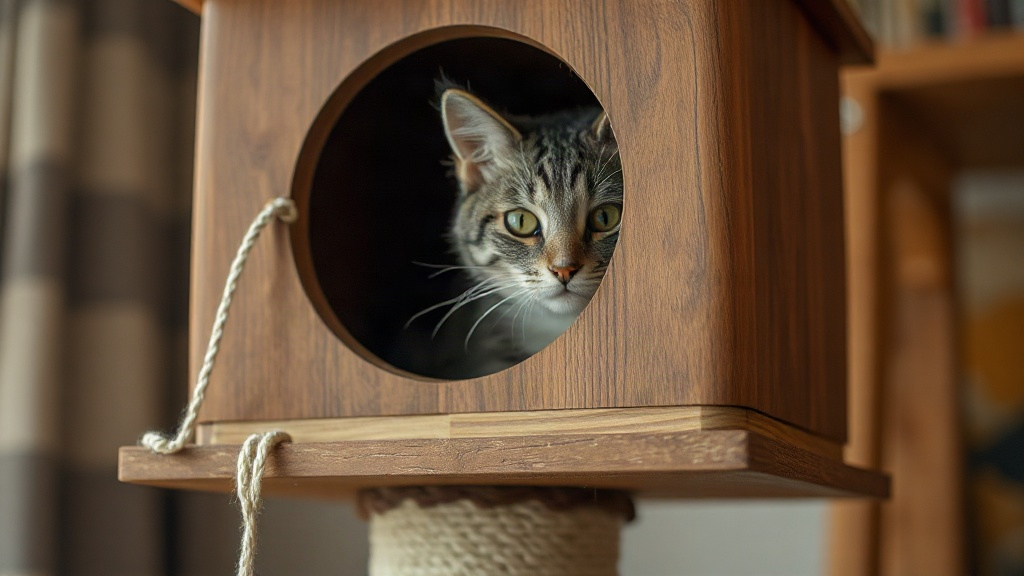
- At least one enclosed space: Condos, cubbies, or boxes give cats a hiding option that isn’t under your bed.
- A moderate height (e.g., 3–5 feet): Tall enough to feel like a real vantage point, not so tall that it intimidates a cautious cat.
- Sisal scratching surfaces: The most universally accepted scratching material.
Avoid spending heavily on features you can’t verify your cat will use (hammocks, dangling toys, elaborate multi-level configurations). Those can come later in an upgrade once you know your cat.
For guidance on choosing the right size, see our how to choose cat tree size guide.
Bottom line
A cat tree isn’t optional furniture—it’s a functional tool for helping your new cat feel safe. Having it ready before adoption means your cat starts building confidence from day one instead of spending their first week hiding under the bed. Buy basic, observe your cat, then upgrade based on what you learn. The small risk of getting preferences slightly wrong is worth the large benefit of immediate vertical territory.
Sources:
- Jackson Galaxy, “Total Cat Mojo” (2017) — Base camp setup, scent-soaking, and vertical territory concepts
- ASPCA, “Introducing Your Cat to a New Home” — Pre-arrival preparation recommendations
- Veterinary guidelines note the behavioral needs of indoor cats
- Professional feline practitioners recommend vertical space