Cat Trees for Shy or Anxious Cats (2026): Why Enclosed Hideaways Beat Open Perches
As an Amazon Associate I earn from qualifying purchases. Product details may change; verify on Amazon before purchase.
The short answer
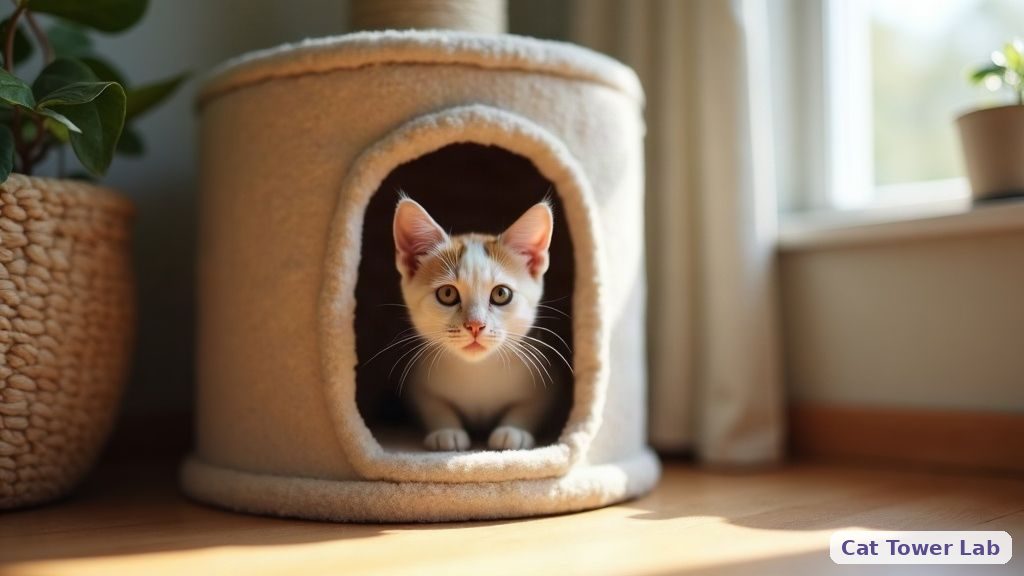
If you only want one recommendation: Hey-brother Cat Tree Tower with Big Condo. A roomy fully-enclosed condo at an easy-to-reach height gives an anxious cat the one thing it needs most — a den it can retreat into while still keeping an eye on the room.
Check price on Amazon →🔍 How this guide was put together (Editorial Standards)
This guide compares options using published manufacturer specifications, patterns in publicly visible owner reviews, and reputable expert sources. We do not operate a physical testing lab; see our how-we-research page for details.
| Rank | Product | Name | Why we picked it | Buy |
|---|---|---|---|---|
| Top pick | 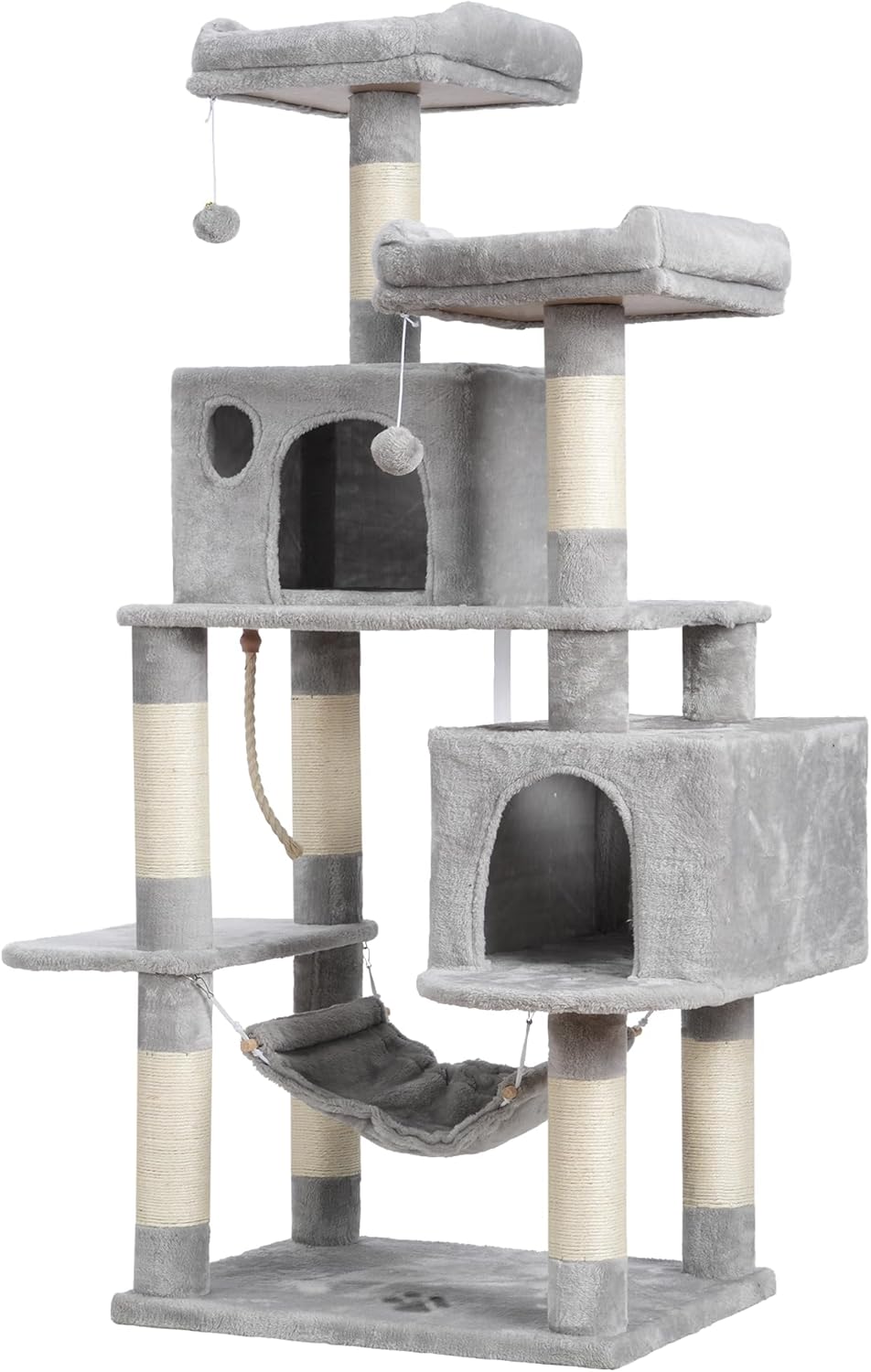 | Hey-brother Cat Tree Tower with Sisal Scratching Posts and Big Condo (enclosed den) | Check price | |
| Runner-up |  | Hey-brother 53in Cat Tree Tower with Sisal Scratching Posts (mid-height, easy climb) | Check price | |
| Also great |  | Amazon Basics Cat Tower with Hammock Bed and Scratching Post (low, simple, non-threatening) | Check price |
Advice for shy cats usually gets the hierarchy backwards. Guides push the tallest tower with the highest lookout, because that is what a confident cat gravitates to. A timid cat — a new rescue, a cat rattled by a move, or one that vanishes when the doorbell rings — reads a tall open perch as exposure, not privilege. What it actually wants is a place to hide that still lets it watch. Get that one insight right and the rest of the buying decision falls into place.
Read the cat, then buy the tree
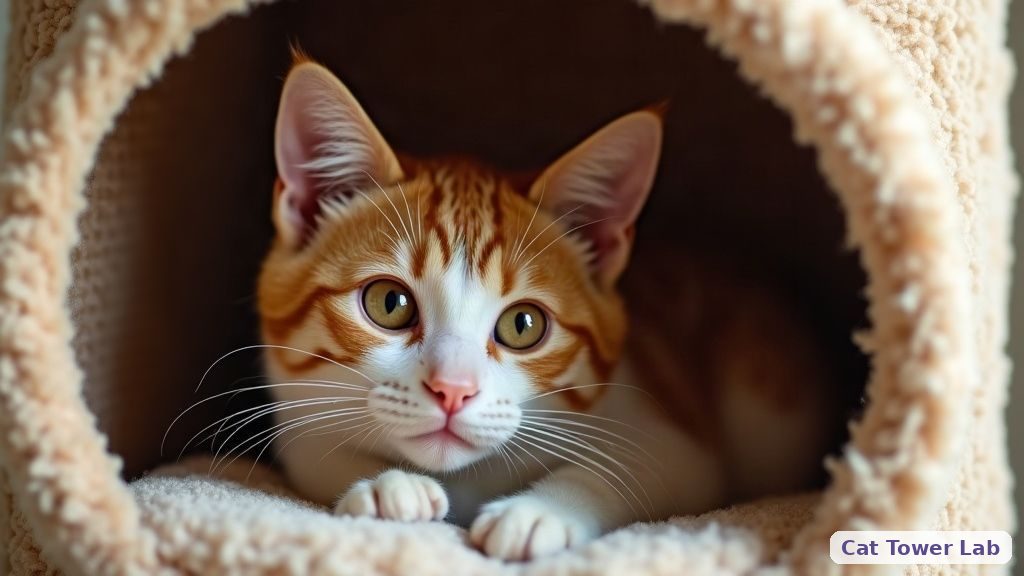
The Cornell Feline Health Center and most feline-behaviour resources agree on a simple principle: safety comes before stimulation. An anxious cat that has a reliable retreat will, over weeks, grow bold enough to use the open parts of a tree. A cat with no retreat stays stressed and often stops using the tree entirely. So the features that matter flip:
- Enclosed condos over open perches. A cubby with a roof and one or two openings is a den. It muffles sound, hides the cat’s body, and — crucially — has an exit, so the cat never feels cornered.
- Low and mid entry points. A nervous cat wants to reach shelter in one easy hop, not a four-stage climb it has to commit to. Height can come later.
- A view from inside. The ideal condo has a second opening or window so the cat can survey the room without leaving cover. Hiding and watching is what lowers the heart rate.
How we picked
This is a research-based comparison drawing on manufacturer specifications, recurring themes in verified owner reviews from people with timid cats, and established feline-behaviour guidance on retreat and habituation. We do not fabricate ratings or claim a hands-on test we didn’t run; where a point rests on specs or behavioural literature rather than testing, we say so. Current price and availability sit on the live Amazon listing, which we link rather than quote.
Why does an enclosed condo calm a nervous cat?
Cover reduces perceived threat. Inside a roofed condo — like the one on the Hey-brother Big Condo model — the cat’s flanks and back are protected, so it can down-regulate instead of staying in scan-for-danger mode. A flat open perch offers none of that, which is why shy cats walk past beautiful tall towers and wedge themselves under the sofa instead.
How high should the hideaway be for a timid cat?
Start low. A den reachable in one or two hops — the mid-height Hey-brother 53in or the low Amazon Basics tower — lets the cat commit without feeling trapped mid-climb. Once it uses the low den confidently, you can encourage higher perches. Our guide on getting a cat to actually use its tree covers the food-and-scent steps that speed this up.
Where should I put a tree for a scared cat?
Not in the middle of the busiest room, and not buried in a closet either. A quiet edge with a clear line of sight to the room’s entrance lets the cat monitor “traffic” from safety. Our placement guide explains the sightline logic; for multi-cat homes where one cat bullies the shy one, the multiple-cats setup matters even more.
Does stability matter more for anxious cats?
Yes — arguably most of all. A wobble is a threat signal. If the den shifts when the cat jumps in, it learns the “safe” place isn’t safe and abandons it. Check the base and, for anything tall, anchor it; our anti-wobble guide and wall-securing steps apply doubly here.
Give it time, not just the right tree
Even the perfect den won’t fix anxiety overnight. Set the tree up, seed the condo with a worn t-shirt and a few treats, and let the cat discover it on its own schedule — no coaxing, no lifting the cat into it. The combination of the right shape (enclosed, low, with a view) and a patient introduction is what turns a scared cat into one that owns its corner of the room.