Why Does My Cat Ignore the Cat Tree? 6 Behavioral Reasons (and Fixes)
As an Amazon Associate I earn from qualifying purchases. Product details may change; verify on Amazon before purchase.
🔍 How this guide was put together (Editorial Standards)
This guide compares options using published manufacturer specifications, patterns in publicly visible owner reviews, and reputable expert sources. We do not operate a physical testing lab; see our how-we-research page for details.
📑 Table of contents
You invested in a cat tree expecting your cat to climb, perch, and scratch on it immediately — and instead, they walk past it like it doesn’t exist. This frustration is universal among cat owners, and there’s nothing wrong with your cat. The problem is almost always environmental or experiential, not a personality defect.
Here are six common reasons your cat ignores the cat tree, each grounded in feline behavioral science, with practical fixes you can try today.
1. Wrong placement (a common culprit)
Cats are territorial animals that need to survey their environment from strategic vantage points. Jackson Galaxy, host of My Cat From Hell and author of Total Cat Mojo, emphasizes that vertical space only works when it’s positioned in “socially significant” areas — the rooms where family activity happens.
A cat tree tucked in a spare bedroom, basement, or back corner gives your cat no reason to use it. Cats want to see who’s coming and going. They want windows with birds, streets, or other stimulation. They want to be in the household action, not exiled from it.
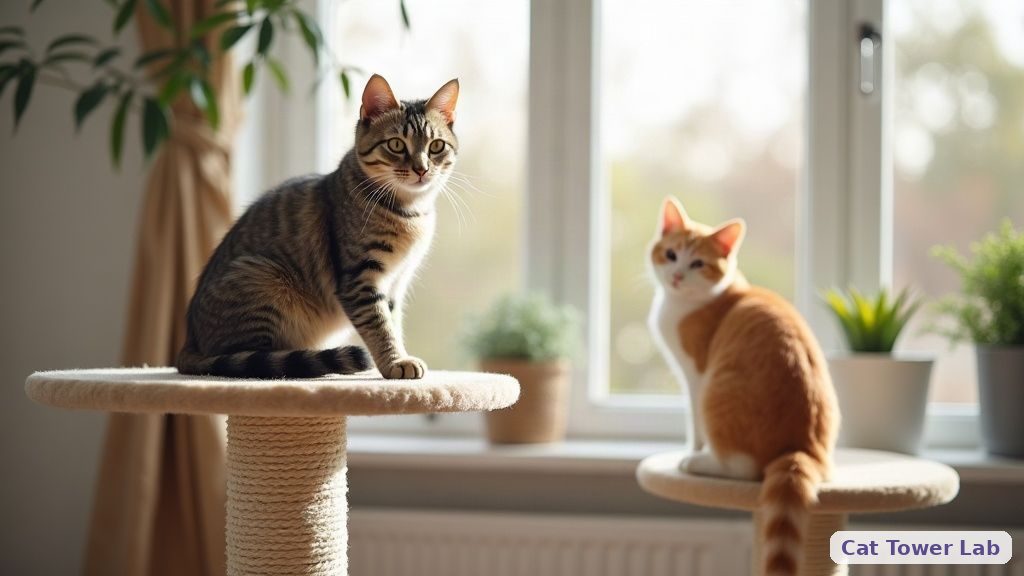
The fix: Move the tree next to a window with an outdoor view, or into your living room where the family gathers. If the tree faces a blank wall, rotate it so your cat can watch the room from the top platform. For a complete room-by-room placement strategy, see our guide on where to place a cat tree.
2. Unfamiliar or “wrong” scent
Cats navigate their world through scent. A brand-new cat tree smells like factory, packaging, and strangers — not like home, and certainly not like your cat.
Pam Johnson-Bennett, certified cat behavior consultant and author of Think Like a Cat, explains that cats deposit facial pheromones on objects they consider “theirs.” A tree that doesn’t carry their scent feels foreign and potentially unsafe.
The fix: Rub a soft cloth on your cat’s cheeks (where the scent glands are) and then rub that cloth on the cat tree’s platforms and posts. Sprinkle catnip on the perches if your cat responds to it (research suggests about 60–70% of cats respond). You can also place a worn t-shirt of yours on one of the platforms to make the tree smell like the family.
3. Wrong height for your cat’s confidence level
Height preference varies by individual cat. A confident, dominant cat wants the highest point in the room — and if your tree isn’t the tallest thing around, they’ll choose the bookshelf or refrigerator instead. A shy or anxious cat, on the other hand, may feel exposed and vulnerable on a tall perch and will avoid it entirely.
The fix: Observe where your cat naturally chooses to rest. If they always pick the back of the couch (mid-height), get them started on a similar-height platform on the tree. If they love the top of cabinets, the tree’s summit needs to be equally high — or higher. Coax them gradually with treats, never force them to a level they find uncomfortable.
4. Texture they dislike
Cats have strong texture preferences, and what feels satisfying to one cat feels wrong to another. Some cats love the dense resistance of sisal rope for scratching; others prefer carpet, cardboard, or bare wood. If your cat tree is wrapped in a material your cat dislikes, they’ll avoid it.
Jackson Galaxy points out that scratching is both a marking behavior (scent glands in the paws) and a muscle-stretch. If the texture doesn’t provide the right resistance, the cat won’t bother.
The fix: Watch what surfaces your cat currently scratches — furniture fabric, cardboard boxes, door frames. Match the tree material to that preference. If your tree has carpet but your cat prefers sisal, wrap one post in sisal rope yourself (it’s cheap and is quick and easy). If they like cardboard, add a cardboard scratching pad to one of the platforms.
5. Previous negative experience
Cats have long memories for negative events. If the tree wobbled the first time your cat jumped on it, if it tipped and scared them, or if another pet ambushed them on it, they may have learned to associate the tree with danger.
Pam Johnson-Bennett notes that a single bad experience can create lasting avoidance, especially in cats that are already anxious. The tree isn’t just ignored — it’s actively avoided.
The fix: First, make sure the tree is genuinely stable. A wobbly tree will never be trusted. Then, begin a gradual reintroduction: place treats at the base of the tree daily, then on successively higher platforms over weeks. Let the cat approach on their own terms. Never place the cat on the tree physically — that creates negative pressure. Use a wand toy to guide them up naturally while playing.
6. Competition from another cat
In multi-cat households, cat trees can become contested territory. If a dominant cat has claimed the tree, a subordinate cat may simply avoid it to prevent conflict. Even if you never see overt fighting, the subordinate cat may have internalized that the tree “belongs” to someone else.
Jackson Galaxy emphasizes that vertical space in multi-cat homes needs to be abundant and distributed. One tree in one location forces cats to compete. Multiple trees — or a single tree with enough platforms that no cat has to pass another to reach their spot — reduces conflict.
The fix: If you have multiple cats, consider whether the ignored tree is actually a territory issue rather than a tree problem. Add a second tree in a different room, or add wall-mounted shelves so each cat has their own vertical territory. If the dominant cat always sits at the top, the subordinate cat needs alternative high-ground options.
How long until my cat uses the tree?
Most cats will begin investigating a properly placed, scent-marked tree within a few days. Full adoption — using it for scratching, napping, and perching — typically takes several weeks. Some cats take longer, especially if they had a negative first impression.
Patience matters more than tricks. Forcing a cat onto a tree backfires. Leaving treats, using catnip, and letting curiosity do its work almost always succeeds.
When to consider a different tree
If you’ve addressed placement, scent, texture, and experience and your cat still ignores the tree after a month, it may simply be the wrong tree for your cat. A shy senior cat may need lower platforms with enclosed condos. A large active cat may need sturdier construction and wider perches. Matching the tree’s design to your cat’s age, size, and personality is the final variable — our guide to cat tree buying mistakes covers what to look for the next time.
The bottom line
Cats don’t ignore cat trees to frustrate you. They ignore them because the tree isn’t positioned where they need to be, doesn’t smell like home, or doesn’t offer the right texture or height. Every one of these factors is fixable with simple adjustments.
Move the tree to a window or social area. Rub your cat’s scent on it. Match the texture to what your cat already scratches. Give it time. Often, the “ignored” tree becomes a favorite spot once you understand what your cat was actually asking for.
Sources
- [Jackson Galaxy: How to Stop Your Cats From Scratching Furniture](https://jacksongalaxy.com/blogs/news/how-to-stop-your-cats-from-scratching-furniture)
- [Pam Johnson-Bennett: Why Does My Cat Scratch the Furniture?](https://catbehaviorassociates.com/why-does-my-cat-scratch-the-furniture/)
- Ohio State Indoor Pet Initiative