Sisal Rope vs Sisal Fabric: Which Scratching Surface Lasts Longer? (2026)
As an Amazon Associate I earn from qualifying purchases. Product details may change; verify on Amazon before purchase.
🔍 How this guide was put together (Editorial Standards)
This guide compares options using published manufacturer specifications, patterns in publicly visible owner reviews, and reputable expert sources. We do not operate a physical testing lab; see our how-we-research page for details.
📑 Table of contents
Sisal fabric generally outlasts sisal rope. Fabric distributes scratching wear across a flat surface, while rope wears down at the edges of each coil where claws repeatedly catch. However, “lasts longer” isn’t the only consideration—cat preference, repairability, and cost also matter.
Here’s what to know about each material and how to choose between them.
How sisal rope wears
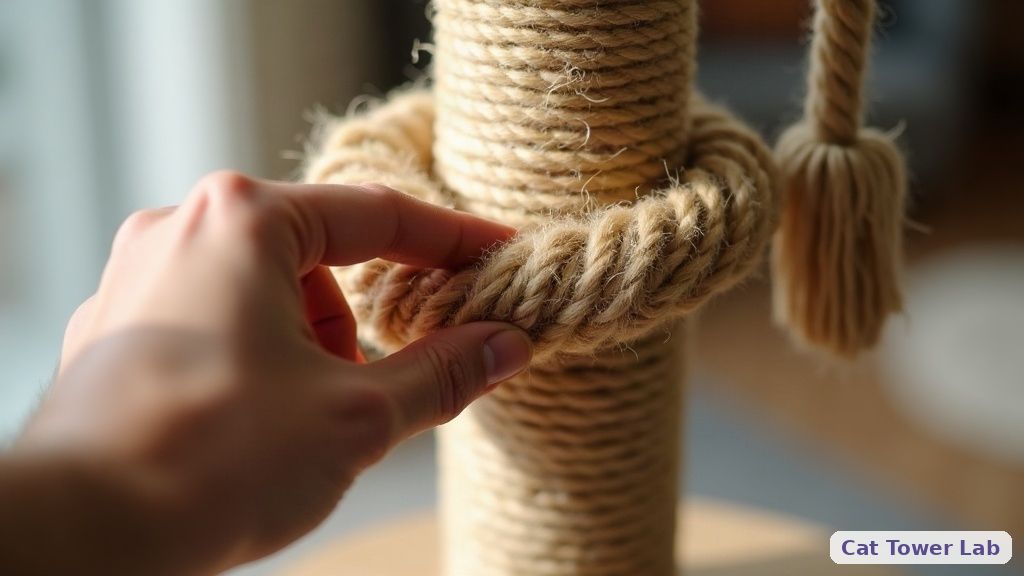
Sisal rope is wound around scratching posts in a spiral. Cats scratch the exposed surface of each coil, and their claws catch at the rope edges. Over time, the top layer of each coil frays and separates.
Eventually the rope loosens, gaps appear between coils, and the scratching surface becomes uneven. Once enough fibers are shredded, cats may lose interest because the texture no longer provides satisfying resistance.
Sisal rope typically shows visible wear within a few months of regular use. The rope doesn’t fail all at once—it degrades progressively from the areas where your cat scratches most.
How sisal fabric wears
Sisal fabric (also called sisal mat or sisal weave) is a flat woven material made from the same agave fiber as sisal rope. Because the weave distributes force across a surface rather than concentrating it on rope edges, the fabric resists fraying longer.
When fabric does wear, it tends to thin evenly rather than developing loose strands. The texture remains scratching-friendly longer into its lifespan.
According to The Refined Feline, a manufacturer of sisal-fabric cat furniture, fabric “provides a more durable option” because “the flat weave distributes the cat’s scratching more evenly across the surface.” While manufacturer claims should be taken with appropriate skepticism, this aligns with the physical behavior of the materials.
Cat preference: most cats accept both
Both sisal rope and sisal fabric satisfy the scratching need. The key texture cats seek is resistance—something that catches claws and allows shredding motions. Both materials provide this.
Some cats develop a preference based on early exposure. A cat raised with rope may initially ignore fabric (and vice versa). But most cats adapt to either.
If you’re unsure which your cat prefers, observe their current scratching targets:
- Scratching at rough textures (tree bark, textured furniture) suggests either sisal will work.
- Scratching at woven materials (rug edges, wicker) may indicate a fabric preference.
According to ASPCA guidance on scratching behavior, the physical action of scratching serves claw maintenance, stretching, and territorial marking. Both sisal types satisfy these needs.
Repairability comparison
Sisal rope can be replaced DIY. When rope wears out, you can unwrap it and re-wrap fresh rope (typically 3/8-inch or 1/4-inch natural sisal, available at hardware stores). This extends post life indefinitely at low cost.
Sisal fabric is harder to replace yourself. It requires cutting, fitting, and gluing or stapling to the surface. Replacement fabric isn’t as commonly available at retail. In practice, fabric surfaces are often discarded and replaced rather than repaired.
If you want a scratching post that you can maintain over years of heavy use, rope wins on repairability. For our guide on extending post life, see cat tree replacement parts.
Cost comparison
Sisal rope scratching posts and trees are widely available at all price points. Rope is the default material for most budget and mid-range cat furniture.
Sisal fabric surfaces are less common and typically appear on higher-end products. Fabric trees often cost 20–50% more than comparable rope trees.
However, if fabric lasts significantly longer, the higher upfront cost may be offset by reduced replacement frequency.
Visual appearance
Sisal rope has a rounded, textured look. When worn, it appears frayed and untidy.
Sisal fabric has a flat, woven appearance that some owners find more furniture-like. When worn, it thins but doesn’t develop the same “shredded” look.
For living rooms where aesthetics matter, fabric tends to maintain appearance longer.
Our recommendation by situation
| Situation | Recommendation |
|---|---|
| Heavy scratcher, DIY-inclined owner | Sisal rope—rewrap when worn |
| Heavy scratcher, no DIY interest | Sisal fabric—lasts longer without maintenance |
| Light scratcher | Either—both will last |
| Budget priority | Sisal rope—cheaper, repairable |
| Aesthetic priority | Sisal fabric—cleaner look |
| Unknown cat preference | Test both with inexpensive scratchers before buying a tree |
Bottom line
Sisal fabric edges out sisal rope on pure longevity because its flat weave distributes wear better than rope edges. But sisal rope is cheaper, easier to replace, and equally effective for the cats. Choose rope if you’re willing to rewrap every year or two; choose fabric if you want lower maintenance and don’t mind paying more upfront.
For a broader look at scratching materials, see our cat tree materials guide.
Sources
- The Refined Feline: Sisal Fabric vs Sisal Rope — Manufacturer comparison of material durability
- ASPCA: Destructive Scratching — Behavioral purpose of scratching