How to Anchor a Cat Tree to the Wall: Step-by-Step Guide
As an Amazon Associate I earn from qualifying purchases. Product details may change; verify on Amazon before purchase.
🔍 How this guide was put together (Editorial Standards)
This guide compares options using published manufacturer specifications, patterns in publicly visible owner reviews, and reputable expert sources. We do not operate a physical testing lab; see our how-we-research page for details.
| Rank | Product | Name | Why we picked it | Buy |
|---|---|---|---|---|
| Top pick | Furniture Anchors 10 Pack, Anti-Tip Earthquake Straps for Baby Proofing (works on cat trees) | Check price |
📑 Table of contents
Tall cat trees can tip when large or athletic cats launch from the top. Wall-anchoring stops this. Pick one of the three methods below based on your wall type and tools available.
Method 1: L-Bracket to Wall Stud (Strongest)
Tools needed: Stud finder, drill, 2-inch wood screws, L-bracket (3-4 inch)
Steps:
- Locate the wall stud nearest the cat tree’s top post. Use a stud finder — knock-test is unreliable.
- Position the cat tree so the top post or platform edge sits within 4 inches of the stud.
- Hold the L-bracket against the wall stud at the height of the cat tree’s top platform. Mark screw holes.
- Pre-drill pilot holes into the stud (5/64-inch bit for 2-inch screws).
- Attach the L-bracket to the wall stud with two screws.
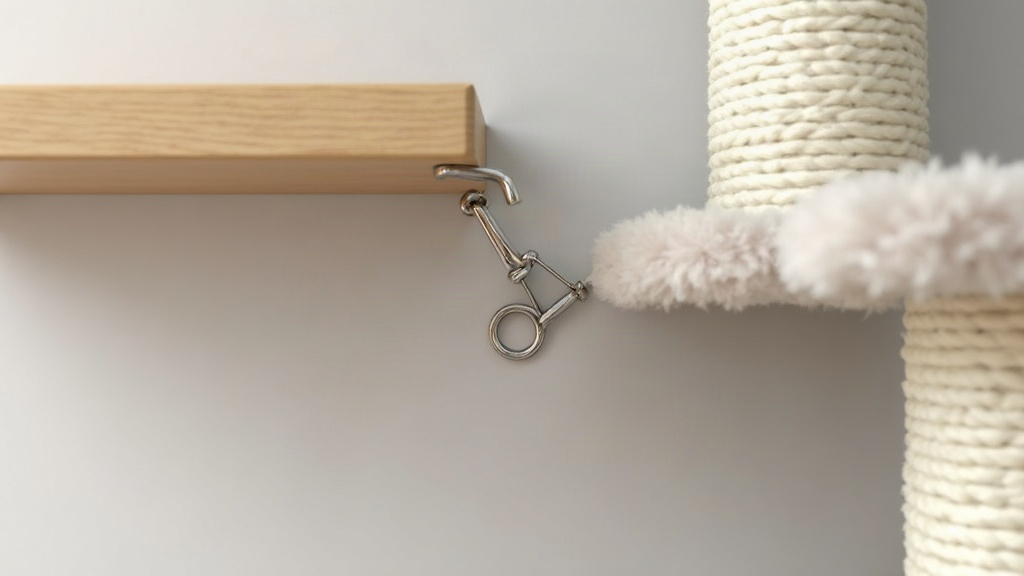
- Screw the other arm of the L-bracket into the cat tree’s top post or platform support using included screws.
Pull strength: 200+ lb into stud.
✅
Stud location tipStuds are usually 16 inches apart. Find one, measure 16 inches to confirm the next. If no stud is within reach, use Method 2.
Method 2: Anti-Tip Furniture Straps (Easiest)
Tools needed: Phillips screwdriver, drywall anchors (included with most kits)
Steps:
- Screw one end of the strap into the top back of the cat tree (behind a platform or into the top post).
- Hold the other end against the wall at the same height. Mark the hole position.
- If hitting drywall (not stud): install the included plastic toggle anchor first.
- Screw the wall bracket through the anchor into the wall.
- Adjust strap tension so there’s no slack but the tree isn’t pulled into the wall.
Pull strength: 100-150 lb with drywall anchor; 200+ lb if you hit a stud.
Method 3: Floor-to-Ceiling Tension (Renter-Friendly)
Tools needed: None (built into tree design)
Steps:
- Position the cat tree where the top pole can reach the ceiling.
- Extend the tension pole until it touches the ceiling.
- Turn the tension adjustment ring (usually at the top) to compress the spring against the ceiling joist.
- Push firmly on the top platform. Tree should not rock more than 1 inch.
Pull strength: 300+ lb when positioned under a ceiling joist.
⚠️
Ceiling type mattersTension poles only work on solid ceilings (drywall, plaster). Popcorn ceiling or acoustic tile can crack. Check for a ceiling joist directly above.
Why Anchoring Matters
The physics: a 15-lb cat launching horizontally from a 5-foot perch generates 60-80 lb of lateral force at the base. A typical cat tree base weighs 8-12 lb. Without anchoring, the tree tips.
Real risks:
- Falling tree: can injure cats, children, or damage floors and walls
- Startled cat: a wobbly tree teaches cats to avoid it, wasting your purchase
- Multi-cat households: two cats on the tree doubles dynamic force
Veterinary data: US emergency vets treat approximately 2,000 cats annually for furniture tip-over injuries. Cat trees rank second after bookshelves.
When to Anchor vs. When to Skip
Always anchor:
- Tree over 60 inches tall
- Cat over 12 lb
- Base under 20×20 inches
- Tree on carpet (soft surface amplifies wobble)
- Children under 6 in the home
Can skip:
- Tree under 48 inches, hardwood floor, single cat under 10 lb
If your tree already wobbles, anchoring helps but may not fully fix it — see our guide to fixing wobbly cat trees for additional solutions.
Frequently Asked Questions
Will anchoring damage the wall? L-brackets leave two screw holes per bracket; straps leave one. Both are patchable with spackling in 5 minutes when you move.
Can I anchor to drywall without a stud? Yes, with toggle anchors or molly bolts. Holds 80-150 lb pull — enough for cats lightweight.
My rental doesn’t allow wall holes — what now? Floor-to-ceiling tension trees require no wall penetration. Or place a heavy plywood base (30×30 inches, 1-inch thick) under the tree to add mass.
How often should I check the anchor? Every 3 months. Straps can loosen; screws can back out over time with vibration.
📚 Related Guides
- Having trouble with a shaky tree? See our guide to fixing wobbly cat trees
- Need a sturdier tree to begin with? Check Best Cat Trees for Large Cats