How to Remove Cat Hair From a Cat Tree: 6 Effective Methods
As an Amazon Associate I earn from qualifying purchases. Product details may change; verify on Amazon before purchase.
🔍 How this guide was put together (Editorial Standards)
This guide compares options using published manufacturer specifications, patterns in publicly visible owner reviews, and reputable expert sources. We do not operate a physical testing lab; see our how-we-research page for details.
📑 Table of contents
- Quick Answer: Best Methods to Remove Cat Hair
- Why Cat Hair Bonds So Tightly to Cat Tree Fabric
- Method 1: Rubber Gloves (Static Friction)
- Method 2: Vacuum With Upholstery Attachment
- Method 3: Lint Roller
- Method 4: Damp Microfiber Cloth
- Method 5: Rubber Squeegee or Pet Hair Rake
- Method 6: Fabric Softener Spray (Static Reduction)
- Recommended Cleaning Frequency
- Maintaining Sisal Posts
- What to Avoid
- When to Consider Replacement
- Summary
Editorial Note: This guide is based on textile cleaning principles and practical pet-owner experience.
Quick Answer: Best Methods to Remove Cat Hair
- Rubber gloves — Dampen slightly, drag across carpet. Static electricity bundles loose fur into rollable clumps.
- Vacuum with upholstery attachment — Motorized brush heads agitate fibers and extract deep-seated undercoat.
- Lint roller — Fast surface pass; best for light maintenance between deep cleans.
- Damp microfiber cloth — Wipe in one direction; collects fine hair and dander simultaneously.
- Rubber squeegee or pet hair rake — Scrapes embedded fur out of carpet pile where vacuums fail.
- Fabric softener spray — Light mist loosens static-clinging hair before vacuuming.
Why Cat Hair Bonds So Tightly to Cat Tree Fabric
Cat tree carpet is typically low-pile loop fabric or plush fleece. When cats knead, groom, and sleep on these surfaces, individual hairs become mechanically interlocked with the textile loops. The barbed microscopic structure of cat hair — especially undercoat — resists simple vacuum suction.
Cats shed year-round, but seasonal coat blowouts occur during spring and fall when daylight duration shifts trigger hormonal molting responses. During these shedding periods, hair accumulation on cat trees accelerates dramatically and requires more aggressive removal techniques.
Method 1: Rubber Gloves (Static Friction)
A very fast manual method. Dry or slightly dampened rubber gloves create electrostatic friction that bundles scattered hairs into removable clumps.
How to do it:
- Put on standard household rubber cleaning gloves (dishwashing gloves work perfectly).
- Dampen lightly under running water and shake off excess.
- Drag your palm firmly across each carpeted platform in long, unidirectional strokes.
- Hair will gather into felt-like rolls — pick these off and discard.
- Rinse gloves periodically to remove accumulated fur.
Good for: Quick maintenance between thorough cleanings.
Method 2: Vacuum With Upholstery Attachment
Standard vacuum hoses lack the agitation needed to dislodge interlocked cat hair. Motorized upholstery brush attachments with spinning bristles physically lift embedded fur before suction extracts it.
How to do it:
- Attach the motorized upholstery brush (not the flat crevice tool).
- Set vacuum to medium suction — excessive suction can damage loose carpet fibers.
- Work in overlapping horizontal passes across each platform.
- Use the crevice attachment for seams where platforms meet posts.
- Empty the canister or replace the bag frequently; pet hair clogs filters fast.
Good for: Weekly deep maintenance and high-shedding seasons.
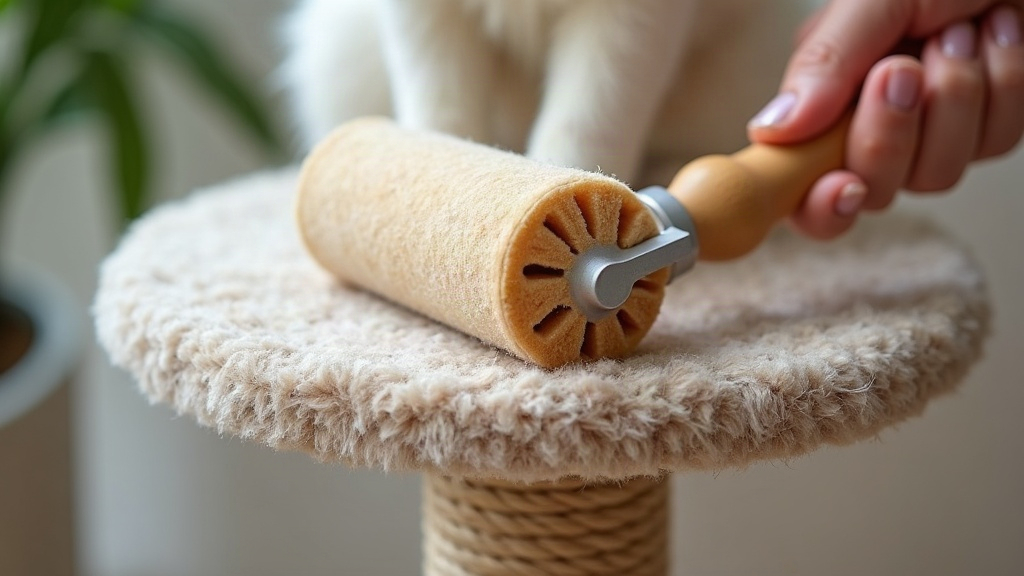
Method 3: Lint Roller
The familiar adhesive-sheet roller handles light surface hair quickly but exhausts sheets rapidly on heavily furred trees.
How to do it:
- Roll firmly across each platform surface until adhesive loses tack.
- Tear off the used sheet and continue with fresh adhesive.
- Use short, overlapping strokes rather than long sweeps.
Good for: Quick touch-ups before guests arrive; minimal shedding periods.
Limitation: Ineffective on deeply embedded undercoat — use rubber gloves or vacuum first.
Method 4: Damp Microfiber Cloth
Microfiber’s split-fiber structure grips fine hairs that other methods miss, while light moisture adds surface tension to collect dander particles.
How to do it:
- Dampen a clean microfiber cloth under warm water; wring thoroughly until barely damp.
- Wipe each surface in one consistent direction (not back-and-forth).
- Rinse cloth frequently as hair accumulates.
- Allow surfaces to air dry before cat use.
Good for: Final pass after vacuuming; capturing fine dander and allergen particles.
Method 5: Rubber Squeegee or Pet Hair Rake
When vacuum suction fails to extract fur that’s mechanically woven into carpet pile, physical scraping with a rubber edge pulls embedded hairs loose through static friction.
How to do it:
- Use a stiff-edged rubber window squeegee or purpose-built pet hair rake.
- Drag firmly across carpet at a 45-degree angle.
- Hair will roll into dense felt strips — collect and discard.
- Follow with vacuuming to extract loosened debris.
Good for: Heavy accumulation, seasonal blowout recovery, neglected trees.
Method 6: Fabric Softener Spray (Static Reduction)
A diluted fabric softener mist neutralizes the static charge that bonds hair to synthetic carpet fibers, making subsequent vacuuming far more effective.
How to do it:
- Mix 1 tablespoon liquid fabric softener with 2 cups water in a spray bottle.
- Mist lightly over carpeted surfaces — do not saturate.
- Allow a few minutes to penetrate.
- Vacuum immediately while fibers are still slightly relaxed.
- Let air dry completely before cat use.
Caution: Use unscented, dye-free fabric softener. Fragrance-free formulas are often preferred for cats.
Recommended Cleaning Frequency
| Shedding Level | Frequency |
|---|---|
| Low-shedding breeds (Siamese, Bengal) | Regularly |
| Normal shedding (mixed breeds) | Weekly |
| Heavy shedding (Maine Coon, Persian) | 2–3 times weekly |
| Seasonal blowout periods (spring/fall) | Daily light maintenance + weekly deep clean |
Daylight duration is believed to be what — not temperature — triggers seasonal molt cycles in domestic cats. Indoor cats under artificial lighting may shed more consistently year-round.
Maintaining Sisal Posts
Sisal scratching posts accumulate less visible hair but still trap shed claw sheaths and loose undercoat.
- Use a stiff-bristle brush to comb down the rope fibers weekly.
- Never wet sisal; water weakens the natural plant adhesives and causes unraveling.
- For stubborn debris, use a dry lint brush or compressed air.
What to Avoid
- Never use sticky tape directly on carpet — adhesive residue attracts dirt and degrades fibers.
- Avoid soaking carpeted platforms — moisture damages the particleboard substrate underneath.
- Skip ammonia-based cleaners — cats may interpret ammonia as urine and begin marking the tree.
When to Consider Replacement
If hair removal efforts no longer restore the carpet appearance, or if platforms feel matted and compacted even after thorough cleaning, the textile is likely degraded beyond recovery. For guidance on selecting a new tree, see our cat tree materials guide to understand which fabrics resist fur accumulation better.
For full odor and biological stain removal (urine, vomit), see our complete how to clean a cat tree guide.
Summary
Six effective methods exist for removing embedded cat hair from cat trees:
- Rubber gloves for quick static-friction collection
- Vacuum with motorized upholstery attachment for weekly maintenance
- Lint rollers for light touch-ups
- Damp microfiber cloths for fine dander capture
- Rubber squeegee or rake for heavily embedded fur
- Fabric softener spray to reduce static before vacuuming
Frequency depends on your cat’s shedding pattern. During seasonal coat blowouts, daily light maintenance prevents overwhelming accumulation. Between seasons, weekly vacuuming with periodic rubber-glove passes maintains cleanliness without excessive effort.