Modern Cat Trees for Stylish Homes (2026): Furniture That Doesn't Look Like Pet Gear
As an Amazon Associate I earn from qualifying purchases. Product details may change; verify on Amazon before purchase.
The short answer
If you only want one recommendation: Armarkat B7701 77-Inch Real Wood Cat Tree. Solid ivory-finished wood, a slim vertical footprint, and a genuinely furniture-like silhouette make it the rare tall tree you can put in a living room without apologising for it.
Check price on Amazon →🔍 How this guide was put together (Editorial Standards)
This guide compares options using published manufacturer specifications, patterns in publicly visible owner reviews, and reputable expert sources. We do not operate a physical testing lab; see our how-we-research page for details.
| Rank | Product | Name | Why we picked it | Buy |
|---|---|---|---|---|
| Top pick | 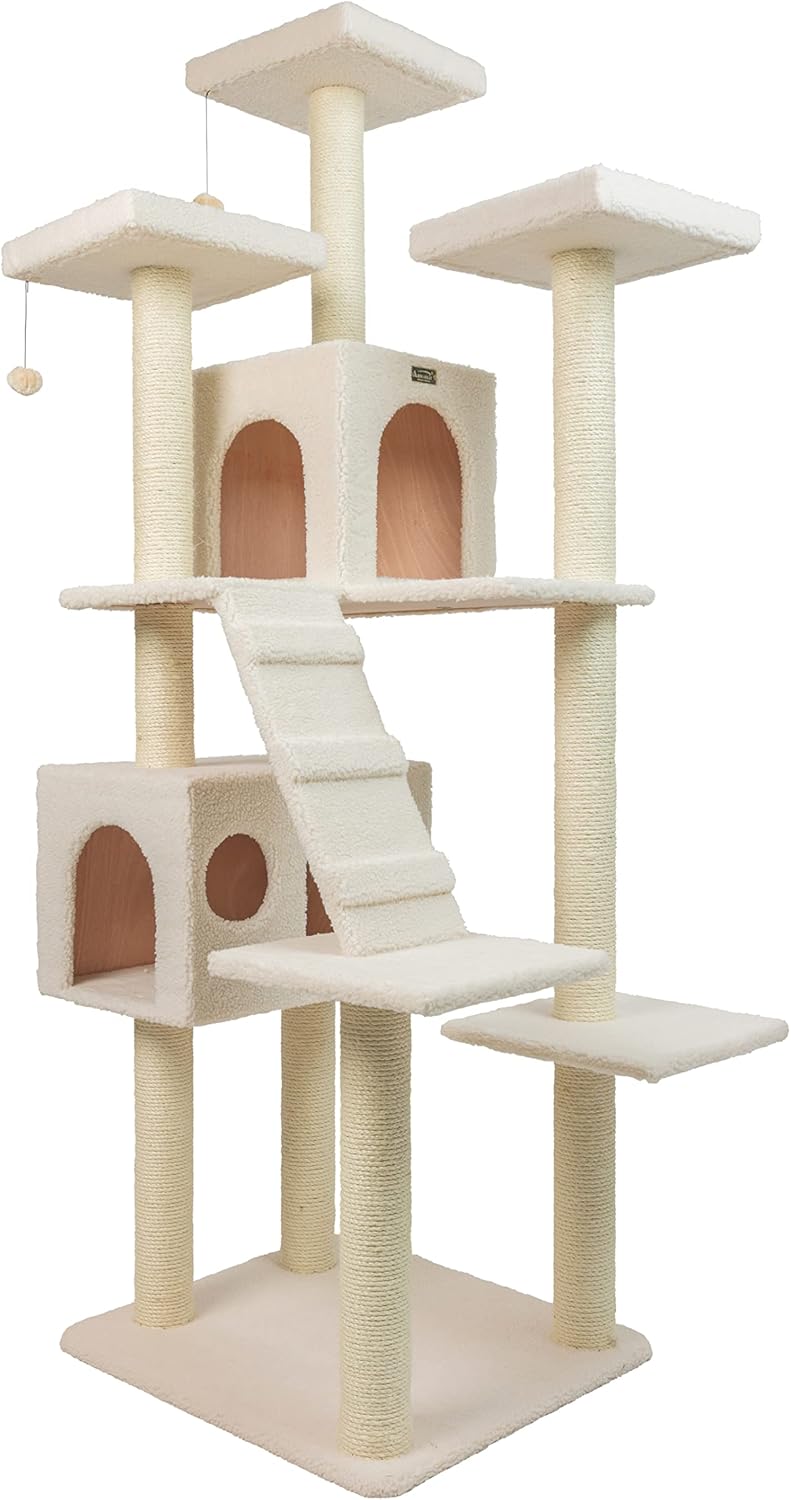 | Armarkat B7701 77-Inch Real Wood Cat Tree (ivory, slim tall column) | Check price | |
| Runner-up |  | Armarkat A7202 72-Inch Real Wood Cat Tree (beige, hardwood base) | Check price | |
| Also great |  | Hey-brother Cat Tree Tower with Tiered Padded Platforms & Condos (neutral tones) | Check price |
Most cat trees are designed as if the only person in the room is the cat. The result is a beige carpet-wrapped tower that fights every other object you own for attention — and usually loses. If you have spent any time arranging a room you actually like, you know the quiet frustration of adding one and watching it swallow a corner. This guide starts from the opposite premise: the tree has to earn its place as a piece of furniture first, and please the cat second. The good news is that the two goals overlap far more than the pet aisle would have you believe.
What actually makes a cat tree look “modern”
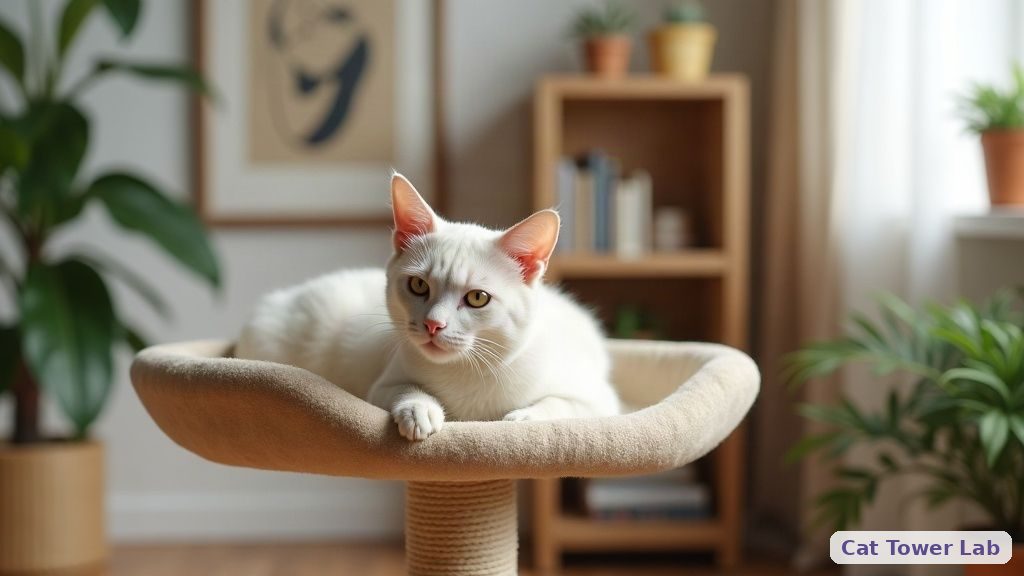
Style in cat furniture is not about a paint colour. Three concrete things decide whether a tree reads as design or as clutter:
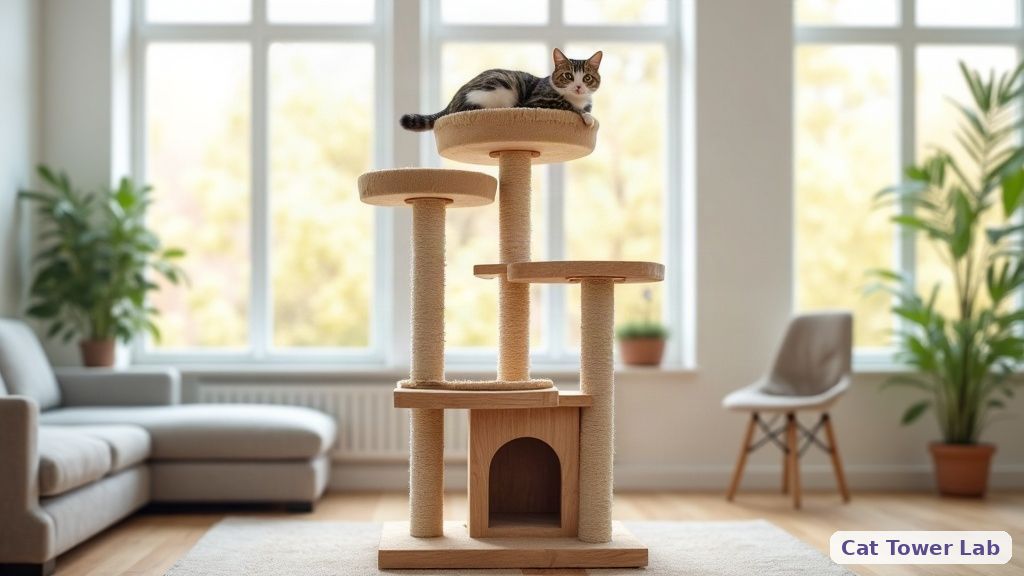
- Material honesty. Exposed real wood — even a simple ivory or beige hardwood — reads as furniture the way carpet-over-particleboard never will. Wood grain gives the eye something intentional to land on.
- Vertical proportion. A tall, narrow column occupies less visual “weight” than a squat, wide base of the same volume. Height also gives your cat what it wants (a lookout) while keeping the floor footprint small.
- Restraint. Fewer dangling toys, fewer clashing textures, a neutral palette. A tree with three tidy perches looks composed; one with eight fuzzy pom-poms looks like a toy store exploded.
Once you judge trees on those three axes rather than on “how many features,” the field narrows quickly.
How we picked
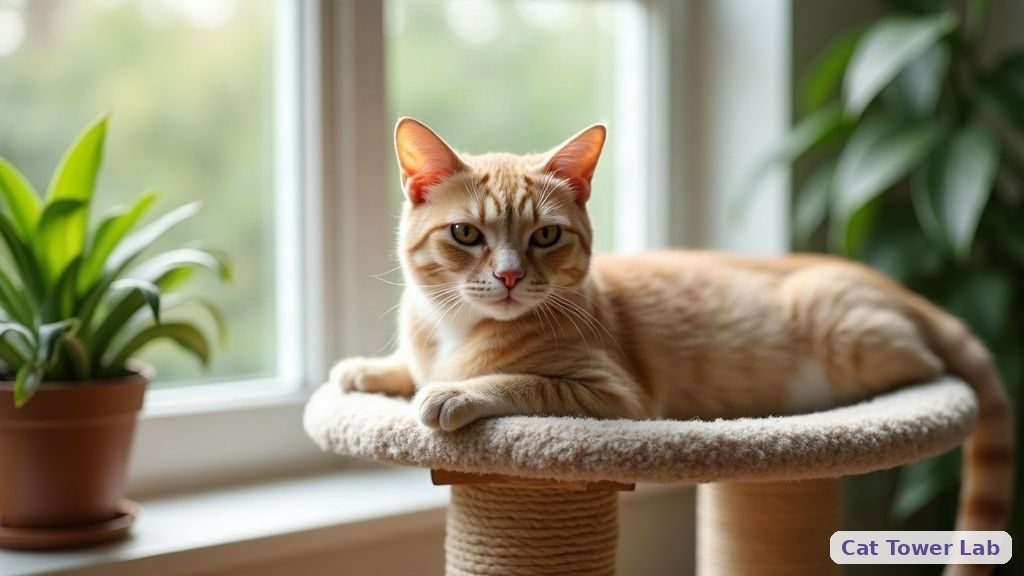
This is a research-based comparison built on manufacturer specifications and the recurring themes in verified owner reviews — with an added filter most guides skip: whether the piece holds up as furniture in a photographed room. Where a claim rests on published specs rather than hands-on testing, we say so, and we never invent ratings or a fake “we tested it on our floor” story. Prices and current availability live on Amazon and change often, so we point you to the live listing rather than quoting a number that will be wrong by next week.
Which finish looks best in a bright, neutral room?
Real-wood models in ivory or beige — like the Armarkat B7701 and A7202 — disappear into Scandinavian and warm-minimalist rooms because they echo the wood tones already in your flooring and furniture legs. Carpeted grey towers, by contrast, tend to read as a separate “pet zone” no matter where you put them.
Does a tall, slim tree really save space?
Yes, and it is the single most underrated design move. A 77-inch column such as the B7701 gives a cat two or three elevation levels while standing on a base barely wider than a side table. You get the vertical territory cats crave without sacrificing walking space — the opposite trade-off of a wide, low tower. If square footage is your real constraint, our small-apartment cat tower guide goes deeper on footprint math.
Can a stylish tree still be stable enough?
It has to be — a beautiful tree that wobbles gets ignored by the cat and resented by you. Real-wood bases are naturally heavier and lower their centre of gravity, which helps, but always check the base width against the height. We break down the physics of tip-resistance in the sturdiest cat trees guide, and wall-anchoring any tall piece is cheap insurance covered in our wall-securing walkthrough.
What about the “padded platform” look?
The Hey-brother tiered model is the middle path: not bare wood, but neutral, low-contrast upholstery and a calm silhouette rather than the usual carnival of colours. It suits a room that wants some softness without a beige monolith. If your taste runs to genuinely premium pieces, compare it against our luxury cat tree picks.
Placing a design-first tree
A stylish tree still follows feline rules: put it near a window with a view, not hidden in a spare room, or your cat won’t use it and the whole aesthetic argument is moot. Our guide on where to place a cat tree reconciles the interior-design instinct (tuck it away) with the behavioural one (make it a destination) — usually a bright corner with sightlines into the room wins on both counts.
Buy for the room you actually live in, anchor anything tall, and give it a window. Do that and the tree stops being the thing you hope guests don’t notice and becomes the thing your cat — and your eye — both keep returning to.