Floor-to-Ceiling Cat Trees: Maximum Vertical Territory in Minimal Floor Space
As an Amazon Associate I earn from qualifying purchases. Product details may change; verify on Amazon before purchase.
The short answer
If you only want one recommendation: Armarkat B7701 77-Inch Real Wood Cat Tree. It reaches near-ceiling height on a slim, heavy real-wood base — giving climbers the vertical territory they crave while taking up barely more floor than a side table, and it's sturdy enough not to sway at the top.
Check price on Amazon →🔍 How this guide was put together (Editorial Standards)
This guide compares options using published manufacturer specifications, patterns in publicly visible owner reviews, and reputable expert sources. We do not operate a physical testing lab; see our how-we-research page for details.
| Rank | Product | Name | Why we picked it | Buy |
|---|---|---|---|---|
| Top pick | 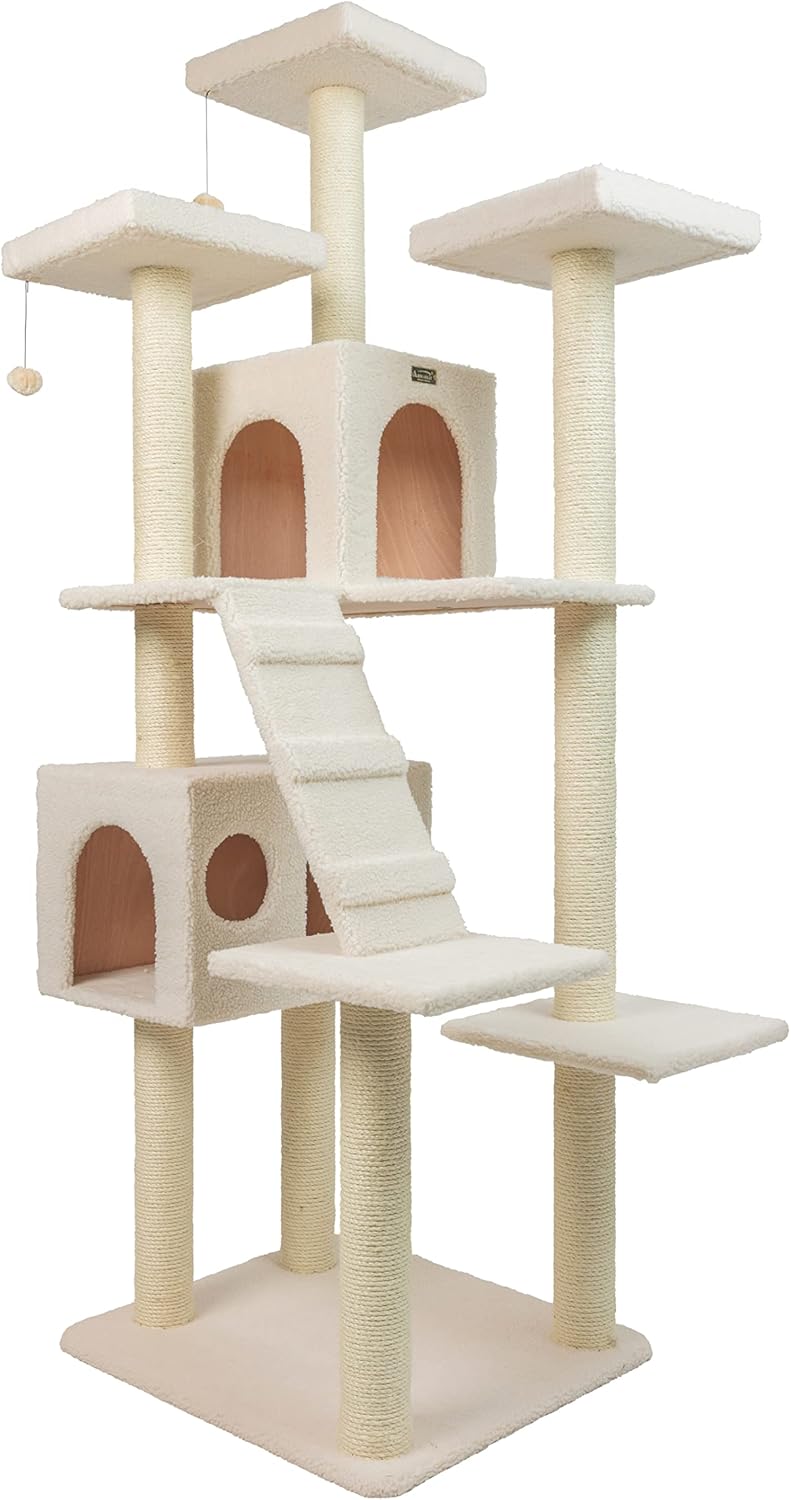 | Armarkat B7701 77-Inch Real Wood Cat Tree (tall, slim, stable base) | Check price | |
| Runner-up |  | Armarkat A7202 72-Inch Real Wood Cat Tree (near-ceiling, hardwood base) | Check price | |
| Also great | 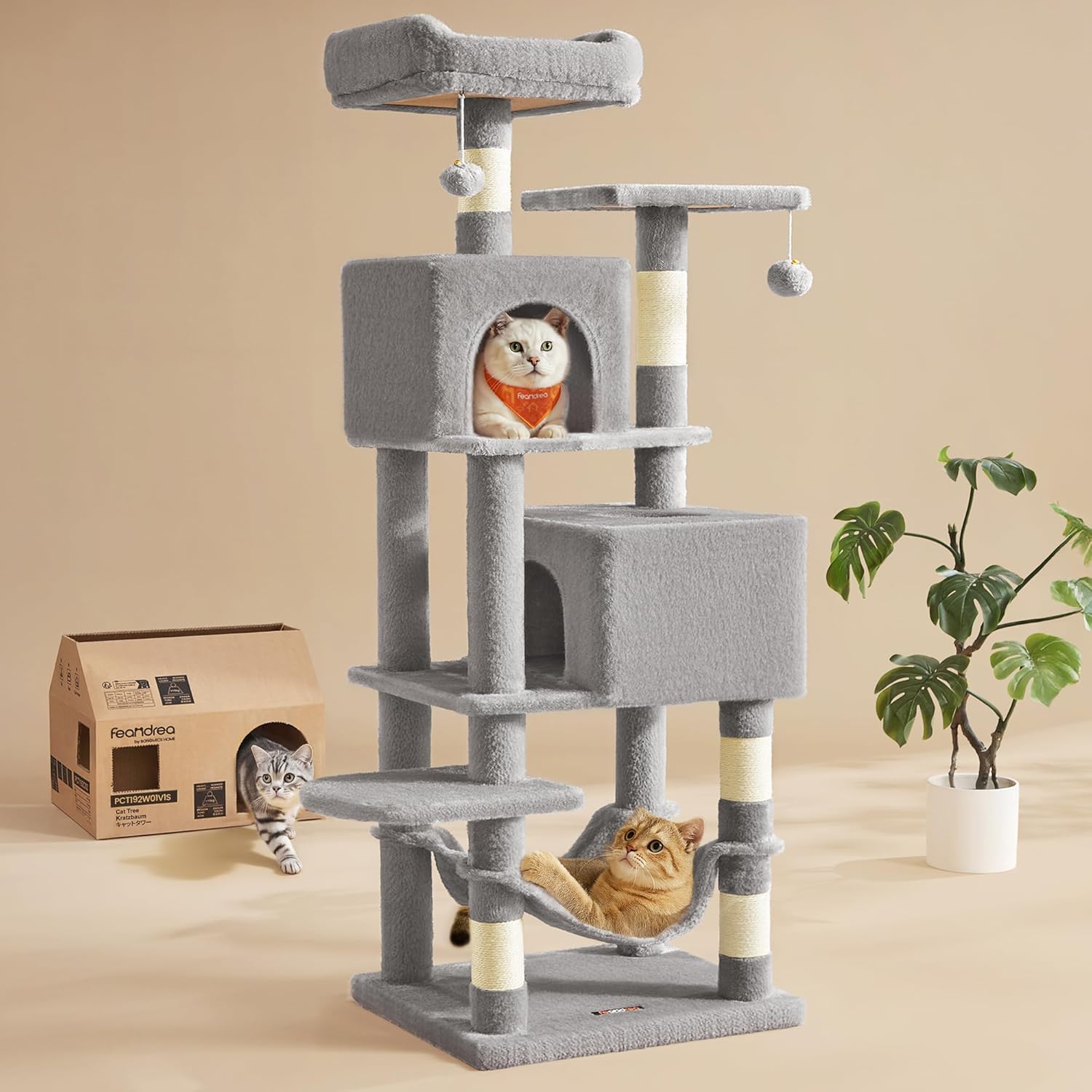 | Feandrea 59.5-Inch Tall Cat Tower (multi-level vertical space) | Check price |
Cats are climbers by instinct — height is safety, territory, and entertainment all at once. But floor space in most homes is the thing you can’t spare. That’s the whole appeal of a floor-to-ceiling (or near-ceiling) cat tree: it trades vertical space, which you have plenty of, for floor space, which you don’t. Done right, one tall tower gives a climber more usable territory than three squat trees while occupying a footprint the size of a side table. Here’s how to get the height without the wobble.
Why vertical space matters more than floor space to a cat
A cat values a room by its high perches, not its square footage. Elevated spots let them survey their territory, escape stress, and rest where they feel secure. A tall tree:
- Multiplies usable territory in a small home — several perches stacked upward instead of spread across the floor.
- Reduces conflict in multi-cat homes by giving each cat its own level (more on that in our multiple-cats guide).
- Suits high-energy climbers who ignore low trees but love to ascend.
The catch: the taller a tree, the more its stability depends on the base and anchoring.
The stability rule for tall trees
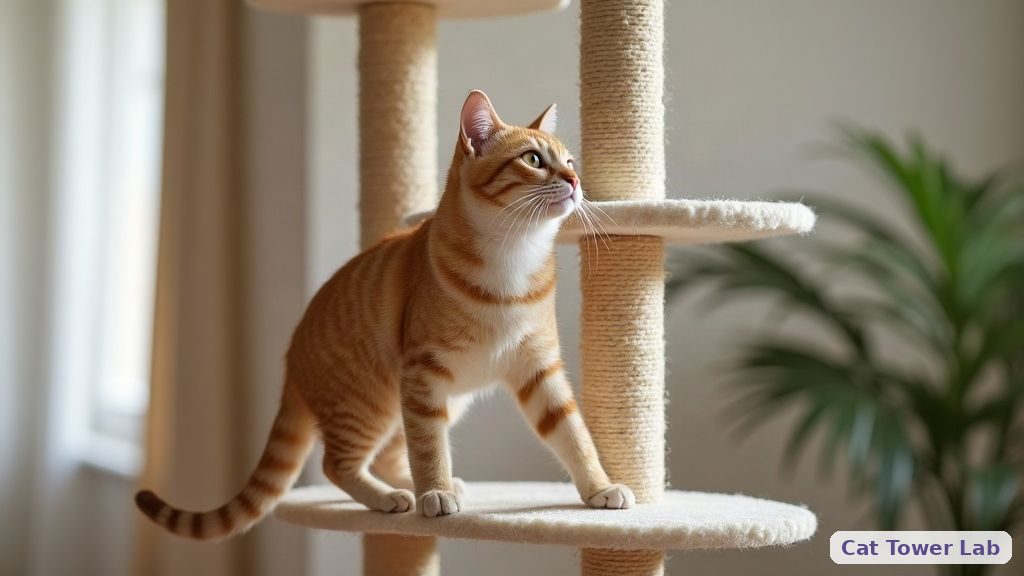
Height amplifies every stability weakness. Before you buy tall, check:
- A wide, heavy base. A tall tree on a narrow base is a lever — a cat launching off the top makes the whole thing rock. Real-wood bases (like the Armarkat models) are heavy and low, which fights sway. Our anti-wobble guide covers the physics.
- Thick, rigid posts. Tall + thin = flex that telegraphs up the tower. Look for solid posts.
- A wall anchor or ceiling tension option. The single best upgrade for any tall tree — anchoring the top to a wall removes sway entirely. See our wall-securing walkthrough.
How tall should a cat tree be?
As tall as your cat will use and your stability allows — climbers love 60 inches and up, and near-ceiling trees (72–77”+) like the Armarkat B7701/A7202 maximize territory. But height is only good if the tree is stable and anchored; a tall tree that sways gets abandoned. Match height to a wide base and a wall anchor, not to the biggest number alone.
Are tall cat trees safe?
Yes — if built and anchored right. A tall tree with a wide heavy base and a wall anchor is very safe; a tall tree on a small base with no anchor is a tip risk, especially with a big cat. Always check the base width against the height and anchor anything near-ceiling. For heavy breeds, our large-cats guide weighs stability specifically.
Do floor-to-ceiling trees work in small apartments?
They’re arguably best there — you get maximum vertical territory on a tiny footprint, exactly what a small space needs. A slim tall tower beats a wide low one when floor space is scarce; our small-apartment cat tower guide goes deeper on footprint.
What’s the difference between “floor-to-ceiling” and tension-pole trees?
True floor-to-ceiling trees use a tension pole braced between floor and ceiling (very stable, but needs a solid ceiling); “tall freestanding” trees (like the Armarkats and Feandrea here) reach near-ceiling height on a weighted base and are easier to place. Both give height — freestanding is simpler; tension-pole is the most rock-solid if your ceiling suits it.
The one to get
For most climbers in most homes, a tall freestanding real-wood tower (Armarkat B7701 or A7202) gives near-ceiling height on a slim, stable base — anchor the top and it’s the most territory per square foot you can buy. Want more levels for the money? The Feandrea 59.5” stacks vertical space affordably. Whichever you pick, check the base width and anchor it — height only helps if it doesn’t sway. See the live listing for exact height and base dimensions.