DIY Cat Tree Plans: What to Actually Get Right (Beyond the Cutting List)
As an Amazon Associate I earn from qualifying purchases. Product details may change; verify on Amazon before purchase.
🔍 How this guide was put together (Editorial Standards)
This guide compares options using published manufacturer specifications, patterns in publicly visible owner reviews, and reputable expert sources. We do not operate a physical testing lab; see our how-we-research page for details.
📑 Table of contents
DIY cat tree builds save money and let you customize exactly to your space, but most free plans online focus on the cutting list and skip the stability engineering that actually determines whether the finished tree is safe. Here are the rules that matter most.
Base-to-height ratio (the rule most plans skip)
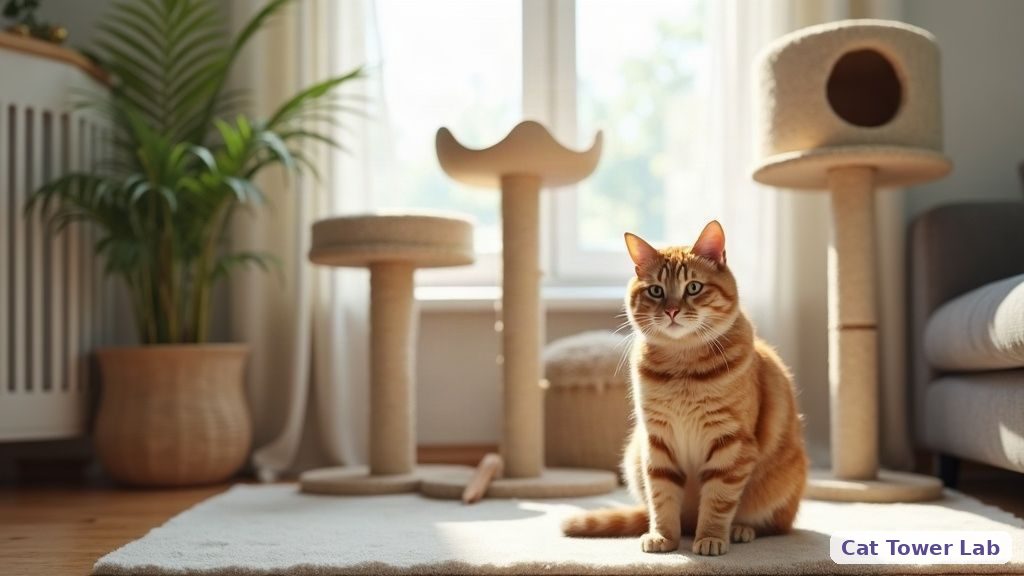
A stable base needs to be roughly 40-50% of the tree’s total height in diameter. A 60-inch tall tree needs a base around 24-30 inches across — undersized bases are the single most common DIY stability failure, and it’s rarely mentioned in basic cutting-list plans.
Material choices that actually matter
Plywood over particleboard for the base. Plywood holds screws better and resists moisture-related warping over years of use — worth the modest cost difference for the one component carrying all the structural load.
Real wood or thick PVC pipe for posts — not thin dowels. A post needs to resist lateral force from a cat launching off the top, not just support static weight.
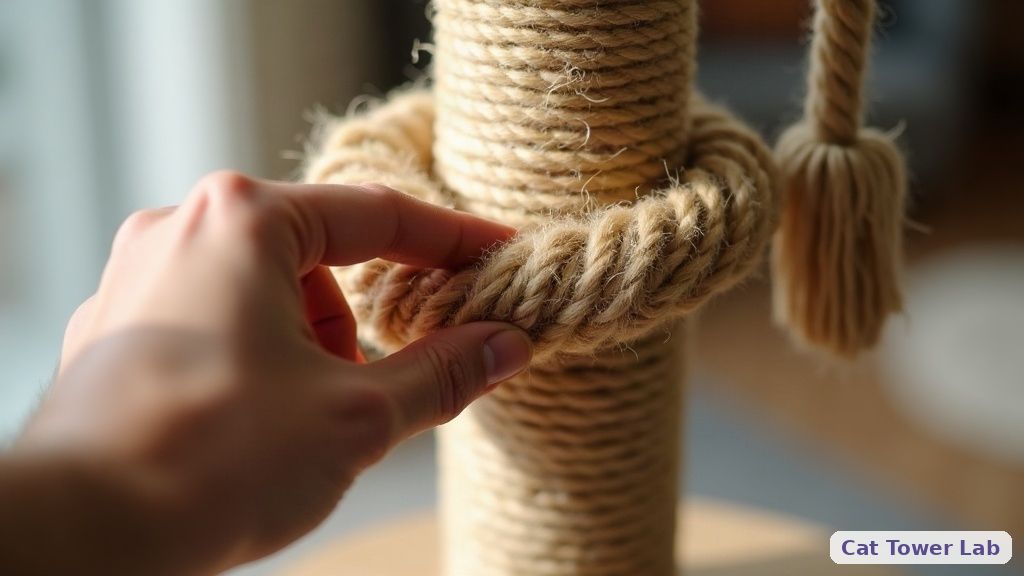
Carpet remnant or sisal rope for scratching surfaces — sisal rope wrapped and glued lasts significantly longer under daily scratching than stapled carpet.
Skip the "just use a tall board" plans. Single-post designs without a wide base or wall support are a genuine tip-over risk for any cat over 8-10 lb. If a plan doesn't address base width or wall anchoring, verify the stability math yourself before building.
Wall anchoring for tall builds
Any DIY tree over 5 feet should include a wall-strap anchor point in the design from the start — retrofitting this after the build is harder than integrating it into the initial construction. See our full wall-anchoring guide for anchor types and installation.
Weight capacity math for DIY builds
If you’re building for a specific cat, calculate for 3x their body weight as dynamic load — a cat launching off a top perch generates significantly more force than their static weight alone. A adequately heavy cat needs platforms and connections rated to handle roughly significantly more force than static weight, not just adequately heavy of static support.
When DIY makes less sense than buying
If your cat is large (Maine Coon, Ragdoll — 12+ lb) or highly athletic (Bengal), the engineering margin for error shrinks considerably. A commercially engineered tree with tested weight ratings may be the safer choice unless you’re confident in structural calculations — see our large cat guide for tested options.
FAQ
Is it cheaper to build a cat tree than buy one? Often yes for materials cost alone, but factor in tool access, time, and the stability engineering knowledge needed to build safely — a mid-tier commercial tree may be comparable value once time is factored in.
What’s the biggest mistake in DIY cat tree builds? Undersized base relative to height. The base should be roughly 40-50% of total tree height in diameter — thinner bases risk tip-over, especially with larger or more athletic cats.
Do DIY cat trees need to be anchored to the wall? Yes, if over 5 feet tall — build the wall-strap anchor point into the initial design rather than retrofitting it afterward. See our wall-anchoring guide for method.
What wood is best for a DIY cat tree? Plywood for the base (holds screws better, resists warping) and solid wood or thick PVC pipe for posts (resists lateral launching force better than thin dowels).
Can I use carpet instead of sisal for scratching posts? Yes, but expect shorter lifespan under daily scratching — sisal rope, though slightly more expensive upfront, typically outlasts stapled carpet by 2-3x.