Best Cat Trees for Ragdolls (2026): Large-Breed Picks for a Chill Cat
As an Amazon Associate I earn from qualifying purchases. Product details may change; verify on Amazon before purchase.
🔍 How this guide was put together (Editorial Standards)
This guide compares options using published manufacturer specifications, patterns in publicly visible owner reviews, and reputable expert sources. We do not operate a physical testing lab; see our how-we-research page for details.
📑 Table of contents
Ragdolls are one of the largest domestic cat breeds — adult males routinely hit 15-20 pounds — but personality-wise they’re the opposite of climbers. Ragdolls are famously docile, floppy, and prefer lounging over leaping. That combination changes what “best cat tree” actually means for the breed: you’re optimizing for large stable perches at moderate height, not maximum vertical territory.
What makes Ragdolls different from other large breeds
They lounge more than climb. A tall tall tree gets underused if the Ragdoll rarely climbs past the middle level. Better to invest in wide comfortable platforms at 30-50 inches than in a 72-inch tower.
They go limp when picked up. That “floppy” personality means they distribute weight when lying down — a Ragdoll asleep on a platform effectively acts as 15-20 lb of dead weight, no self-balancing. A platform with a lip or bowl shape prevents them from rolling off during sleep.
They tolerate other cats well. Multi-cat households frequently have 2+ Ragdolls. You need multiple perches at the same height so cats don’t compete for the top spot.
They’re prone to obesity. Ragdolls have slow metabolism. A cat tree that encourages movement (multi-level with genuine climbing) helps offset this.
💡
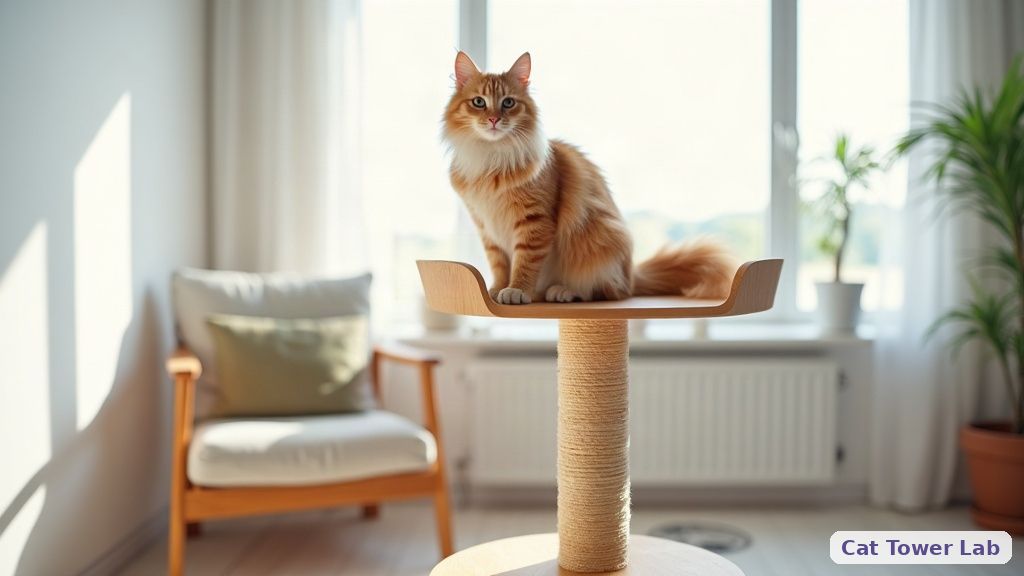
Ragdoll cat-tree sweet spot50-60 inches tall (not 72+), with a wide top platform (18-20 in), 2-3 mid-level lounge shelves, moderate stability (they don't launch as hard as Maine Coons).
Top picks for Ragdolls
Why NOT to buy a “budget large cat” tree for Ragdolls
Cheap trees marketed as “large cat” are often rated for lower weight capacity. That’s fine for a lean 10-lb cat, borderline for a 15-lb Ragdoll, and dangerous for an 18-lb male. What happens: the platform sags over 3-6 months, then the perch board detaches from the post at the mounting screw. Owner discovers this when they hear the tree collapse at 3am.
Placement for Ragdolls specifically
Ragdolls are social — put the cat tree in the primary shared living space (living room, home office), NOT a spare bedroom. They want to be near their humans. See our placement guide for exact spot selection math.
Ragdoll size chart (measure your cat first)
| Age | Typical weight | Recommended platform width |
|---|---|---|
| 6 months | 6-10 lb | 14 in |
| 1 year | 10-14 lb | adequate width |
| 2-3 years (still growing) | 12-18 lb | adequate width |
| 4+ years (adult) | 15-20 lb | 18-generous width |
Ragdolls take 3-4 years to reach full size — longer than most breeds. Buy the tree for adult size, not kitten size.
Frequently asked questions
Do Ragdolls actually use cat trees? Yes if the tree matches their lounging preference. A tall thin tree gets ignored; a mid-height tree with wide platforms gets used daily.
Can I use a large-cat tree for a Ragdoll? Yes, and it’s often the right choice — Ragdolls hit large-breed weights, they just don’t act like Maine Coons. Prioritize platform width over height.
How many perches for a 2-Ragdoll household? At least 3 (one per cat + one shared). Same height, not stacked — Ragdolls avoid dominance play but appreciate parallel perches.
Are Ragdoll kittens hard on cat trees? They’re less rough than Bengal kittens but heavier than standard kittens by 6 months. Get the adult-size tree from day one; they grow into it fast.
Ragdoll won’t jump on the tree — what’s wrong? Two common causes: (1) top perch too high for a lounger — try a mid-height tree; (2) placement too isolated — move to shared living space. See our how to get your cat to use it.
Related: Maine Coon picks · placement guide · multi-cat households