How to Fix a Wobbly Cat Tree
As an Amazon Associate I earn from qualifying purchases. Product details may change; verify on Amazon before purchase.
🔍 How this guide was put together (Editorial Standards)
This guide compares options using published manufacturer specifications, patterns in publicly visible owner reviews, and reputable expert sources. We do not operate a physical testing lab; see our how-we-research page for details.
📑 Table of contents
A wobbly cat tree isn’t just annoying—it’s a potential concern that your cat will eventually refuse to use. Cats instinctively avoid unstable surfaces because in the wild, a branch that moves unpredictably could mean a fatal fall.
Here’s how to diagnose the cause and fix it.
Quick Diagnosis: Why Is Your Cat Tree Wobbly?
Check these four causes in order:
| Cause | Test | Likelihood |
|---|---|---|
| Loose hardware | Shake tree and listen for rattling | Very common |
| Stripped screw holes | Screws spin without tightening | Often observed over time |
| Uneven floor | Check if base rocks on flat surface | Often overlooked |
| Base too narrow for height | Measure base width vs tree height | Design flaw |
Fix 1: Tighten All Hardware
Time: 10 minutes
Most wobble comes from screws and bolts that have loosened over time from normal use—cats jumping on and off create repetitive stress.
- Flip the tree on its side (remove cats first)
- Hand-tighten every visible screw and bolt
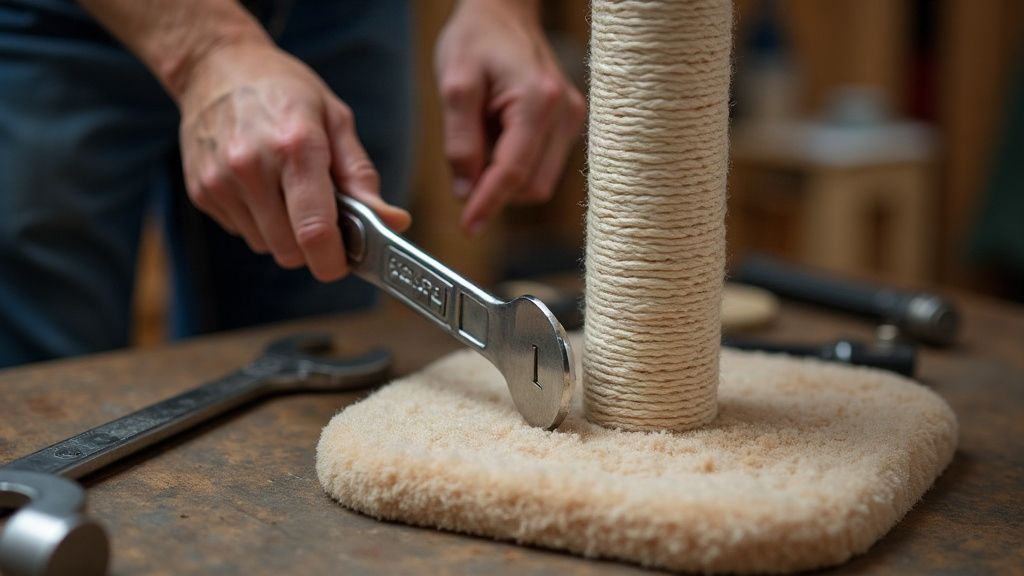
- Use the original Allen key or a screwdriver to snug each connection
- For bolts with nuts, hold the nut while tightening the bolt
- Check platform-to-post connections especially—these take the most stress
Maintenance tip: Retighten hardware every 3-6 months as part of routine maintenance.
Fix 2: Repair Stripped Screw Holes
Time: 30 minutes + drying time
If screws spin freely without gripping, the particleboard hole has stripped. This is a common failure in budget cat trees.
Option A: Toothpick method (quick fix)
- Remove the screw completely
- Insert 2-3 wooden toothpicks into the hole with wood glue
- Break off flush with the surface
- Wait 1 hour for glue to set
- Reinstall screw—it will grip the toothpicks
Option B: Larger screw (more permanent)
- Use a screw one size larger in diameter (e.g., #8 instead of #6)
- Same length as original
- Pre-drill a pilot hole slightly smaller than the new screw
Option C: Wood filler (for badly damaged holes)
- Fill hole completely with wood filler or two-part epoxy
- Wait 24 hours to fully cure
- Drill new pilot hole
- Install screw
Fix 3: Level the Base
Time: 5 minutes
Even a slight floor irregularity can cause wobble that amplifies at the top of the tree.
- Place a level on the base platform
- Identify the low corner
- Shim with:
- Furniture felt pads (1-3mm gaps)
- Cardboard (temporary)
- Rubber furniture cups (also prevents sliding)
For carpet, the base may sink unevenly—check if the wobble appeared after moving the tree to a new location.
Fix 4: Anchor to the Wall
Time: 20 minutes
If your cat tree is tall (60+ inches) with a narrow base, no amount of hardware tightening will make it stable enough. Wall anchoring is the permanent solution.
Why it matters: A cat jumping from height creates significant lateral force. The Consumer Product Safety Commission reports approximately 2,000 emergency room visits per year from furniture tip-overs involving pets.
Method A: L-Bracket (strongest)
- Locate a wall stud using a stud finder
- Position the tree so a vertical post aligns near the stud
- Attach an L-bracket to the stud (use 2.5” wood screws, minimum 2 screws)
- Secure the other side of the bracket to the cat tree post with screws or a hose clamp
- Check by pushing firmly—tree should not move
Pull strength: Properly installed L-bracket into a stud can hold significant lateral force resistance.
Method B: Furniture Anti-Tip Strap
Easier than L-brackets, though slightly less strong.
- Screw the wall plate into a stud
- Loop the strap around a cat tree post
- Adjust tension until snug
Most anti-tip straps are rated for a significant amount of weight—sufficient for cat trees.
Method C: Renter-Friendly Options
If you can’t drill into walls:
- Place the tree in a corner (two walls provide lateral support)
- Add weight to the base (sandbags, books in a box)
- Use a floor-to-ceiling tension pole alongside the tree
Why Cats Avoid Wobbly Trees
Cats are known to have an innate aversion to unstable surfaces. This stems from their evolutionary history as both predator and prey—a cat caught on an unstable branch is vulnerable.
Jackson Galaxy, cat behaviorist and author of Total Cat Mojo, notes that cats “need to feel confident in their vertical territory” and will abandon perches they perceive as unsafe.
If your cat used to love their tree but now avoids it, wobble is often the cause.
When to Replace Instead of Repair
Consider replacement if:
- Multiple posts are cracked or splitting
- Base is warped or cracked
- Sisal is completely shredded to the core
- Carpet is matted and unsanitary despite cleaning
- Tree has been repaired multiple times already
For guidance on choosing a stable replacement, see our cat tree safety checklist and best cat trees for large cats (which prioritizes stability).
Frequently Asked Questions
How often should I check my cat tree for wobble? Every 3-6 months, or immediately if you notice your cat hesitating to jump on it.
Can I use Gorilla Glue to fix stripped holes? Yes, but use sparingly—expanding glues can push joints apart. Wood glue or epoxy are more predictable.
My cat tree has always been wobbly—is that normal? No. Some budget trees ship with poor quality control, but any significant wobble is a defect. Contact the manufacturer for replacement parts or a refund.
Will anchoring damage my wall? Two small screw holes in a stud are easy to fill later. The alternative—a tipped tree and injured cat—is far worse.