How to Get Your Cat to Use a Cat Tree: 7 Proven Tips (2026)
As an Amazon Associate I earn from qualifying purchases. Product details may change; verify on Amazon before purchase.
🔍 How this guide was put together (Editorial Standards)
This guide compares options using published manufacturer specifications, patterns in publicly visible owner reviews, and reputable expert sources. We do not operate a physical testing lab; see our how-we-research page for details.
| Rank | Product | Name | Why we picked it | Buy |
|---|---|---|---|---|
| Top pick |  | Hey-brother 53in Cat Tree Tower w/ Sisal Posts | Check price | |
| Runner-up | 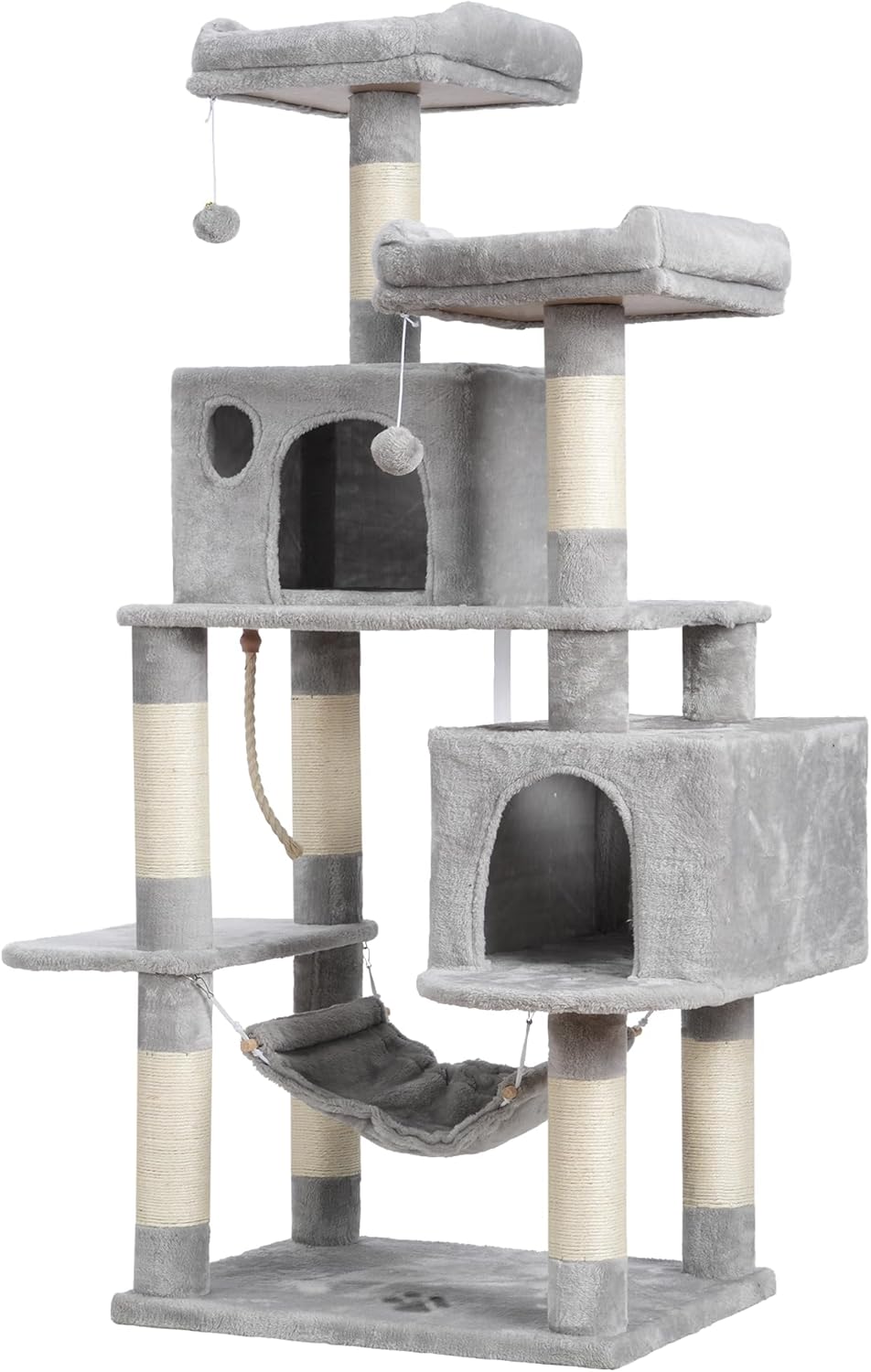 | Hey-brother Cat Tree Tower w/ Big Condo | Check price | |
| Also great |  | Armarkat A7202 72-Inch Real Wood Cat Tree | Check price | |
| Budget pick |  | Amazon Basics Cat Tower w/ Hammock & Scratching Post | Check price |
📑 Table of contents
- 1. Put the tree where your cat already wants to be
- 2. Use catnip and treats to build positive associations
- 3. Make the tree the most comfortable spot in the room
- 4. Play on and around the tree
- 5. Redirect scratching to the tree’s posts
- 6. Go slow and let curiosity do the work
- 7. Consider your cat’s age, size, and confidence
- Give it a week before you give up
You did the research, spent real money, and hauled home a beautiful cat tree — and your cat has decided the cardboard box it shipped in is far more interesting. It’s one of the most common frustrations cat owners face, and the good news is that it’s almost always fixable. Cats don’t reject trees because they dislike them; they ignore trees because of placement, scent, or a bad first impression. Here are seven proven tips to turn that ignored tower into your cat’s favorite spot in the house.
1. Put the tree where your cat already wants to be
The single biggest reason cats ignore a tree is location. Owners tend to place trees where they look tidy — in a spare room, a corner, against a blank wall — which is exactly where cats don’t want to hang out. Cats gravitate toward warmth, vantage points, and the social hub of the home.
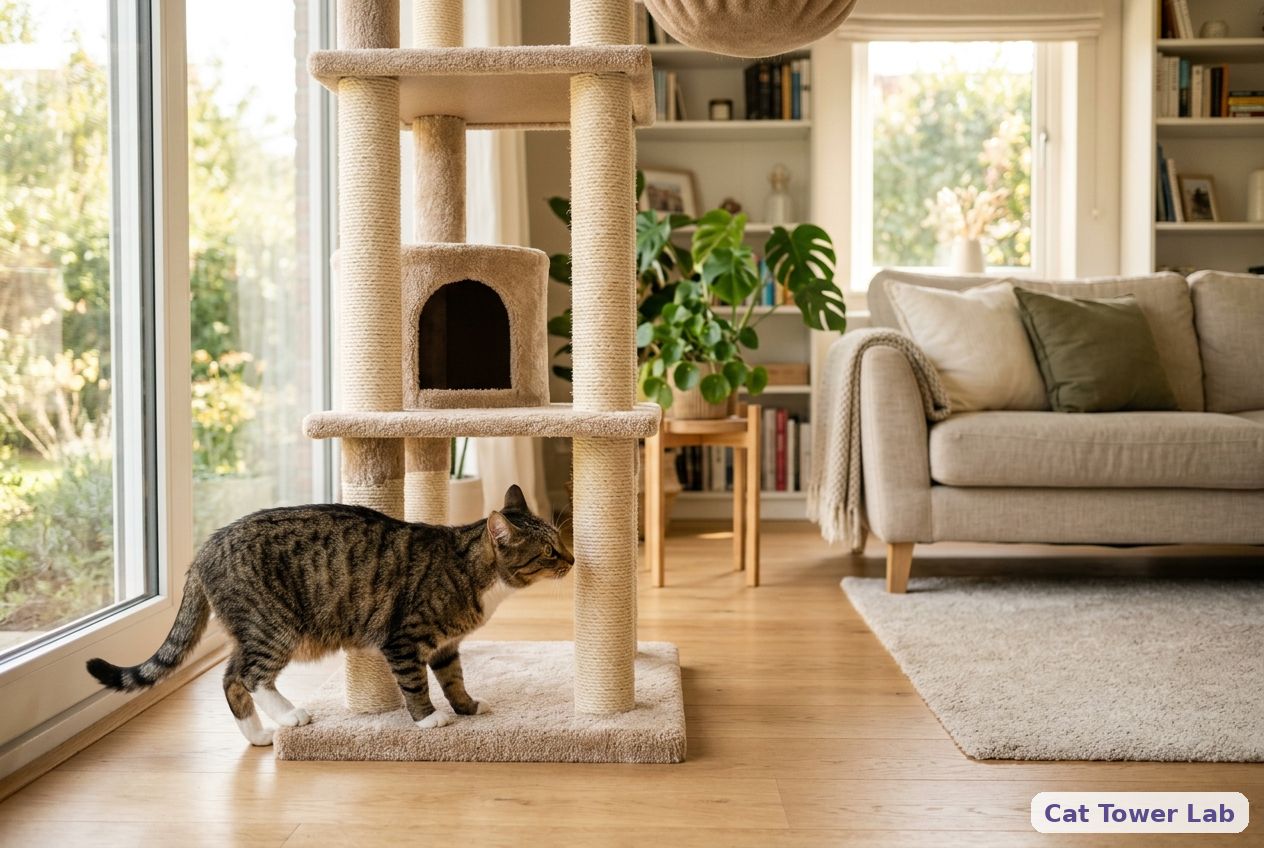
Move the tree next to a window with a view of birds or the street, or into the room where the family actually spends time. A tree that lets your cat survey its territory from height will get adopted far faster than one hidden away. For a full room-by-room breakdown, see our guide on where to place a cat tree.
2. Use catnip and treats to build positive associations
Scent is how cats decide whether something is safe and worth investigating. Sprinkle dried catnip on the platforms and rub a little into the sisal posts, or use a catnip spray if your cat responds to it. About 60–70% of cats react to catnip, and for those that do, it’s an almost instant icebreaker.
For cats that don’t respond to catnip, treats work just as well. Place a few treats on each level, escalating in value as they climb higher — a plain kibble on the bottom, a favorite crunchy treat on top. You’re teaching your cat that good things happen on the tree.
3. Make the tree the most comfortable spot in the room
Cats sleep 12–16 hours a day, and they choose their nap spots carefully. If the top perch is bare, hard, or wobbly, your cat will pick the sofa every time. Add a soft blanket or a bed insert that carries your cat’s scent — a blanket they already sleep on works perfectly.
Stability matters here too. A tree that sways when a cat jumps onto it feels unsafe, and cats will abandon a wobbly tower after one bad experience. If your tree feels tippy, check our sturdiest cat trees anti-wobble guide for fixes, and consider anchoring it to the wall.
4. Play on and around the tree
Interactive play is the fastest way to get a hesitant cat interacting with new furniture. Use a wand toy or feather teaser and lead your cat up and across the platforms, letting them “catch” the toy on each level. Dangling toys attached directly to the tree keep the momentum going when you’re not around.
Two or three short play sessions a day for the first week builds a habit. Once your cat associates the tree with the thrill of the hunt, climbing becomes self-rewarding.
5. Redirect scratching to the tree’s posts
If your cat scratches the couch, the tree’s sisal posts are a competing surface you actually want them to use. Position the tree near the furniture they currently target, and gently place their paws on the sisal so they leave their scent. Reward any scratching on the post immediately.
Vertical scratching is a natural stretch-and-mark behavior — giving cats a good post often reduces unwanted scratching elsewhere. Not sure whether you need a post, a tree, or both? Our cat tree vs scratching post comparison breaks it down.
6. Go slow and let curiosity do the work
Never pick your cat up and plop them on the tree — a forced first experience can create a lasting negative association. Instead, let the tree sit in place for a few days so it absorbs the room’s familiar smells. Cats are neophobic (wary of new things), and time alone resolves much of the hesitation.
Sit near the tree, act relaxed, and reward any voluntary approach with calm praise or a treat. Curiosity is a powerful motivator; your job is to remove pressure and let it take over.
7. Consider your cat’s age, size, and confidence
A senior cat with stiff joints won’t leap to a high perch, and a large breed needs wide, sturdy platforms that a flimsy tree can’t provide. Match the tree to the cat: lower entry levels and ramps for kittens and seniors, generous platforms for big cats, and enclosed hideaways for shy or anxious cats.
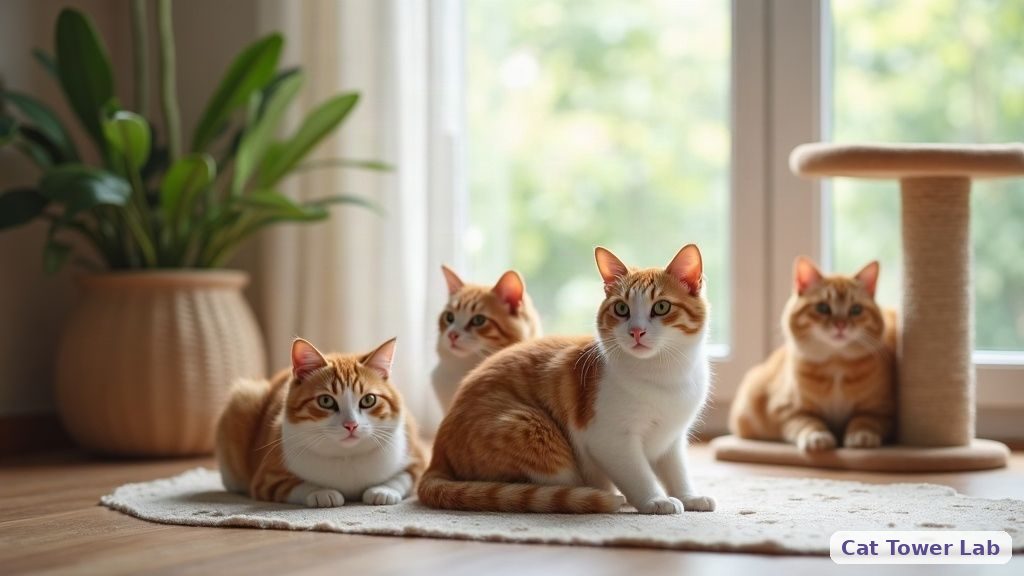
In multi-cat homes, one tree may not be enough — cats guard resources, and a single tower can become contested territory. Adding levels or a second tree lets everyone claim a spot without conflict.
Give it a week before you give up
Most cats that “hate” their tree simply needed a better location, a familiar scent, and a reason to climb. Work through these seven tips over about a week — adjust placement, add catnip and a soft blanket, play daily, and stay patient — and the odds are strong your cat will claim the tree as its own. If it’s still ignored after that, the issue is usually stability or size, not stubbornness, and the right tree for your cat’s needs will change everything.