Carpet vs Sisal Cat Tree: Which Do Cats Prefer? (2026)
As an Amazon Associate I earn from qualifying purchases. Product details may change; verify on Amazon before purchase.
🔍 How this guide was put together (Editorial Standards)
This guide compares options using published manufacturer specifications, patterns in publicly visible owner reviews, and reputable expert sources. We do not operate a physical testing lab; see our how-we-research page for details.
📑 Table of contents
Most cats prefer sisal for scratching. The coarse fiber provides better claw resistance than carpet pile. However, carpet offers comfort advantages for resting platforms—the ideal tree often combines both materials in different zones.
Here’s how each material performs for scratching, resting, durability, and overall cat satisfaction.
Scratching preference: sisal wins
Cats scratch to remove claw sheaths, stretch muscles, and deposit scent. The scratching motion requires resistance—something that catches claws and allows a satisfying shred.
Sisal (whether rope or fabric) provides this resistance consistently. The natural agave fiber has a coarse texture that cats’ claws grip immediately.
Carpet—especially short pile or loop carpet—offers less resistance. Claws may glide over the surface rather than catching. Some cats scratch carpet successfully, but it’s a less universal preference.
According to Cornell Feline Health Center, cats prefer materials that allow “efficient claw conditioning”—sisal’s texture serves this better than most carpet types.
Research from veterinary behaviorists, summarized by The Humane Society, indicates cats show preference for substrates that shred visibly, providing feedback that their scratching is effective. Sisal shreds more satisfyingly than carpet.
Resting preference: carpet wins
For platforms where cats sleep, carpet provides a softer, warmer surface than sisal. Cats nest on carpet; they don’t nest on scratching posts.
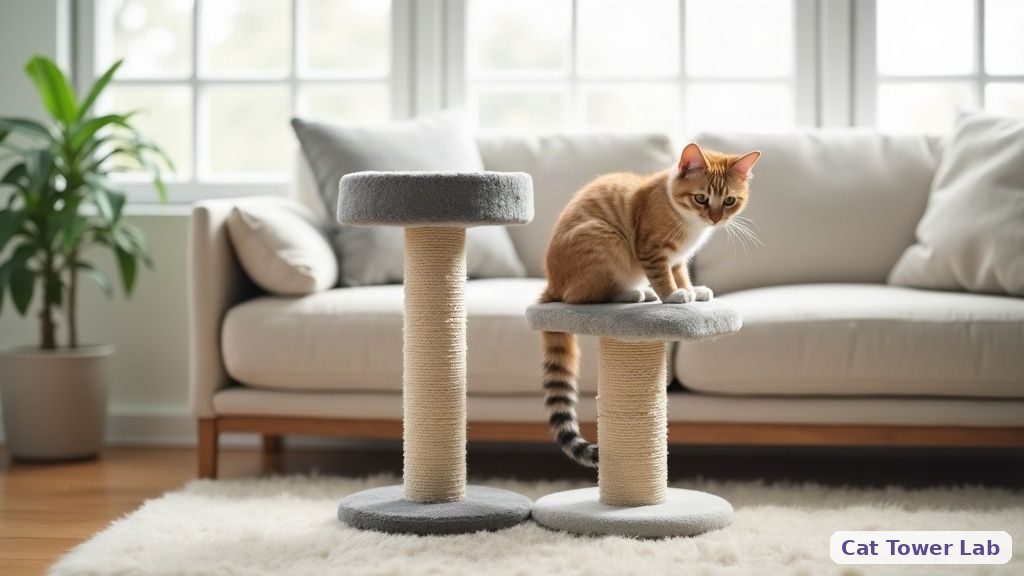
A tree with carpeted platforms and sisal-wrapped posts combines the best of both materials. Cats scratch the posts and lounge on the platforms.
Some all-sisal trees use sisal fabric on horizontal surfaces. This works for climbing and perching but is less comfortable for extended rest than plush carpet or fleece.
Durability comparison
Carpet durability depends on pile type:
- Short loop carpet (commercial style): durable but may snag on claws
- Cut pile plush: comfortable but shows wear quickly
- Berber: snags and unravels when scratched
All carpet attracts hair, dust, and odor over time. Cleaning requires vacuuming and occasional spot-cleaning.
Sisal durability: Sisal frays with use, eventually loosening and looking ragged. However, the functional scratching life often exceeds carpet’s—sisal can be scratched down to the core and still function, while worn carpet loses its appeal faster.
Neither material is permanent. Both will need replacement after extended heavy use.
Maintenance comparison
Carpet requires more cleaning. Cat hair embeds in carpet fibers and must be vacuumed out. Spills (water bowls, hairballs) soak in. Odors accumulate.
Sisal is harder to clean but attracts less debris. Hair sits on the surface rather than embedding. Spot-cleaning sisal is difficult—the fibers absorb moisture and may mildew if not dried thoroughly.
For trees in high-traffic areas, sisal’s lower maintenance wins. For enclosed condos and sleeping platforms, carpet’s comfort justifies the cleaning effort.
Cost comparison
Carpet-covered trees dominate the budget market. Most trees under $75 use carpet throughout.
Sisal-wrapped posts add cost because natural sisal is more expensive than synthetic carpet and requires more labor to apply. Premium trees often combine sisal posts with carpet platforms.
All-sisal trees (including sisal fabric on platforms) tend to be premium products—$150+ for full-size models.
What about other materials?
Beyond carpet and sisal, you’ll find:
- Faux fur/fleece: Comfortable for resting, useless for scratching
- Bare wood: Some cats scratch wood; most prefer sisal
- Jute: Similar to sisal but softer; some cats like it, some don’t
- Cardboard: Popular for scratching but not typical on trees
For a full breakdown, see our cat tree materials guide.
Our recommendation
Get a tree with sisal on vertical scratching surfaces and carpet or fleece on horizontal resting platforms. This matches what cats actually do: scratch vertical posts, sleep on horizontal platforms.
If your cat currently scratches carpet at home, they may accept a carpet-covered tree. Observe their behavior: carpet scratchers often prefer horizontal scratching surfaces (floor level). In that case, add a flat cardboard or sisal scratcher alongside a comfortable carpeted tree.
For cats who ignore carpeted scratching posts, switch to sisal. The texture difference usually converts them.
Signs your cat wants sisal
- Scratches doormats, rough outdoor surfaces, or tree bark
- Ignores carpet posts but scratches furniture legs
- Prefers vertical scratching over horizontal
Signs your cat is fine with carpet
- Currently scratches carpet successfully at home (even if unwanted)
- Uses existing carpet posts without issue
- Prefers horizontal scratching surfaces
Bottom line
Sisal is the better scratching surface for most cats. Carpet is the better resting surface. The ideal cat tree combines both: sisal posts for claw conditioning, carpeted platforms for lounging. When choosing between all-carpet and all-sisal, lean sisal—a cat can rest on sisal, but many cats won’t scratch carpet.
Sources
- Cornell Feline Health Center: Feline Health Topics — Scratching behavior and claw conditioning
- The Humane Society: Destructive Scratching — Cat scratching substrate preferences