How to Clean a Cat Tree: Step-by-Step Guide for Carpet, Sisal & Wood (2026)
As an Amazon Associate I earn from qualifying purchases. Product details may change; verify on Amazon before purchase.
🔍 How this guide was put together (Editorial Standards)
This guide compares options using published manufacturer specifications, patterns in publicly visible owner reviews, and reputable expert sources. We do not operate a physical testing lab; see our how-we-research page for details.
📑 Table of contents
- What you need
- Step 1: Disassemble if possible
- Step 2: Remove hair and debris
- Step 3: Clean each material type
- Step 4: Treat urine stains and odors
- Step 5: Air dry and reassemble
- Why scent matters during cleaning
- Maintenance schedule
- When to replace rather than clean
- Quick reference by surface type
- Summary
- Sources
A cat tree collects fur, dander, food particles, and the occasional accident. Without regular cleaning, bacteria thrive, odors set in, and allergens accumulate. This guide covers every surface type — carpet, sisal rope, and wood — with recommended methods and a maintenance schedule that keeps your cat’s furniture hygienic.
What you need
- Handheld vacuum or vacuum with upholstery attachment
- Lint roller or rubber brush
- Microfiber cloths
- recommended disinfectant spray (e.g., diluted white vinegar 1:1, or commercial options like CleanSmart Daily Surface Cleaner)
- Enzymatic cleaner for urine stains
- Hex key or screwdriver (if disassembling)
- Rubber gloves
- Optional: handheld steam cleaner
Step 1: Disassemble if possible
Most cat trees can be partially or fully disassembled with a hex key. Taking it apart lets you clean hidden crevices where hair and debris collect, and inspect for damage. Before disassembly, take a photo or label parts with masking tape so reassembly goes smoothly.
Not all trees need full disassembly for routine cleaning — but for a deep clean or if you’re dealing with urine, ringworm, or fleas, full disassembly is worth the extra time. While you have it apart, check for loose bolts, cracked platforms, or fraying sisal — see our Cat Tree Safety Checklist for a complete inspection list.
Step 2: Remove hair and debris
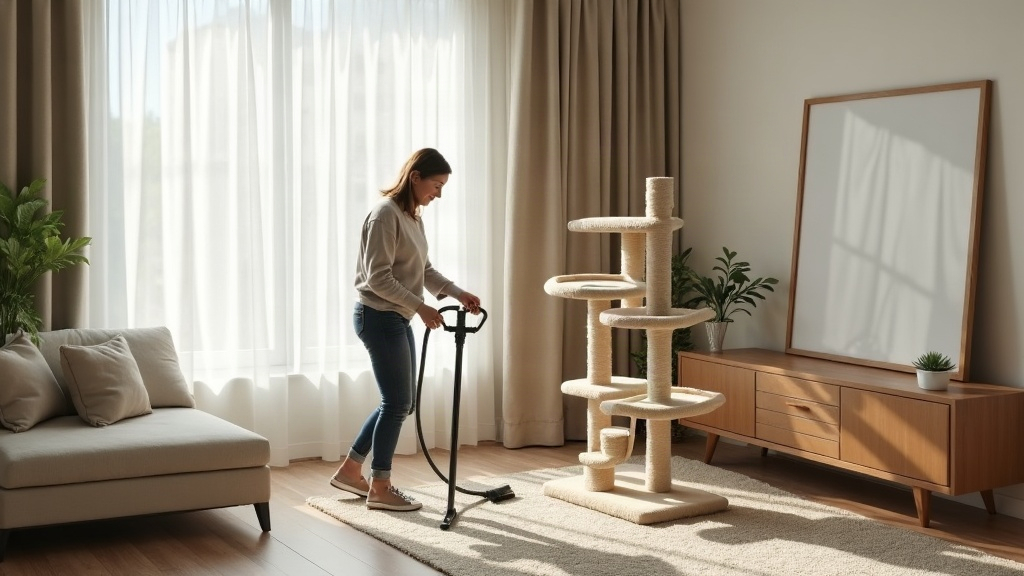
For carpet surfaces: Start with a rubber brush or lint roller to lift matted fur from carpet fibers. Carpet can trap particles more readily than canvas or fleece, so invest extra time here. Follow with a vacuum using the upholstery attachment, going over each platform multiple times.
For sisal posts: Use a stiff brush to dislodge dust and debris caught in the rope fibers. Vacuum the posts with a brush attachment. Sisal shouldn’t be soaked with water — it can loosen the rope and promote mildew.
For wood surfaces: Wipe with a dry microfiber cloth to remove dust and loose hair before applying any liquid cleaners.
Step 3: Clean each material type
Carpet
- Spray lightly with a recommended disinfectant — avoid soaking the carpet, as excess moisture can seep into the core and cause mold
- Let the solution sit for 5–10 minutes
- Scrub gently with a brush to lift embedded dirt
- Blot with a clean, dry cloth to absorb excess moisture
- Allow to air dry completely before reassembly
For stubborn stains, a handheld steam cleaner can help loosen dirt before applying cleaner. Steam can help loosen dirt and may reduce some bacteria and mites without chemicals.
Sisal rope
Sisal is durable but absorbs odors and doesn’t tolerate heavy moisture well. For routine maintenance:
- Vacuum thoroughly to remove dust and claw sheaths
- Wipe with a barely damp cloth — not wet
- For odors, lightly mist with a 1:1 white vinegar and water solution, then allow to dry completely in a well-ventilated area
If sisal is badly soiled or fraying, replacement is often more practical than deep cleaning. Many manufacturers sell replacement posts, and some cat trees are designed with replaceable sisal sections. Our Cat Tree Materials Guide covers which trees offer replaceable parts.
Wood and plastic
- Spray with recommended disinfectant
- Wipe with a damp microfiber cloth
- Dry immediately to prevent warping (for untreated wood)
Avoid phenol-based cleaners on any cat furniture — phenol is toxic to cats even after drying, according to CDC guidance on cleaning pet supplies.
Step 4: Treat urine stains and odors
Cat urine contains uric acid crystals that standard cleaners don’t fully break down. When humidity rises, these crystals reactivate and the smell returns. Enzymatic cleaners use bacteria-produced enzymes to break down uric acid at the molecular level.
According to Nature’s Miracle product documentation, their enzymatic formula “continues working as long as the food source is present” — meaning the enzymes remain active until all organic material is consumed. This is why enzymatic cleaners are often more effective than standard detergents for pet stains.
Application method:
- Blot up fresh urine immediately with paper towels
- Saturate the stained area with enzymatic cleaner — the product must reach the full depth of the stain
- Let sit for 15 minutes minimum; for old stains, leave for 2-4 hours
- Blot (don’t scrub) to remove excess liquid
- Allow to air dry completely — this typically takes 4-8 hours depending on humidity
For heavily soiled cat trees, multiple applications may be needed. Steam clean between applications to help lift residue.
Why odor removal matters for cats: Cats scratch and mark furniture to deposit scent from glands in their paws. According to Cornell Feline Health Center, As Ohio State Indoor Cat Initiative notes, “scratching is largely a marking behavior that deposits scent from special glands on the cat’s paws into his territory.” If a cat has urinated on the tree, the lingering scent can encourage re-marking. Enzymatic cleaners that fully eliminate odor help break this cycle.
Step 5: Air dry and reassemble
Allow all components to dry completely before reassembly. Damp fabric can develop mold, and wet sisal can loosen from posts. If possible, dry components in sunlight — UV light has natural sanitizing properties.
When reassembling:
- Tighten all bolts securely
- Ensure scratching posts can’t rotate (a spinning post can cause a cat to fall)
- Check that the base sits level
Why scent matters during cleaning
Cat behaviorist Jackson Galaxy emphasizes that scratching, rubbing, and sleeping on surfaces are ways cats “claim territory in a positive way” through scent marking. A freshly cleaned cat tree temporarily loses your cat’s scent signature, which can cause initial hesitation.
To help your cat re-acclimate:
- Leave one unwashed blanket or bed in place during cleaning, then return it after
- Rub a soft cloth on your cat’s cheeks (where facial scent glands are located) and wipe it on the clean tree
- Some owners use Feliway spray, which contains synthetic feline facial pheromones
Cornell notes that cats are “more likely to re-scratch areas that already have their scent,” so helping restore familiar scent can encourage continued use of the tree rather than redirecting to furniture.
Maintenance schedule
Daily: Check for accidents or visible soiling. Spot-treat immediately to prevent stains from setting.
Weekly: Vacuum or lint-roll all fabric surfaces. Wipe wood platforms with a dry cloth.
Monthly: Full cleaning as described above. Inspect sisal for wear and rotate or replace worn posts.
Quarterly: Deep clean with steam cleaning (optional). Check all hardware for tightness. Consider enzymatic treatment even without visible stains to eliminate accumulated odors.
When to replace rather than clean
Some situations warrant replacement rather than continued cleaning:
- Sisal is significantly shredded and exposing the core
- Carpet is matted beyond recovery or permanently stained
- Mold or mildew has penetrated the internal structure
- The frame is unstable or hardware holes are stripped
For advice on what to look for in replacement materials, see our Cat Tree Materials Guide.
Quick reference by surface type
| Surface | Safe cleaners | Avoid |
|---|---|---|
| Carpet | recommended spray, enzymatic cleaner, steam | Soaking, bleach |
| Sisal rope | Light vinegar mist, dry brushing | Heavy moisture, soaking |
| Wood (finished) | recommended disinfectant, damp cloth | Phenol products, excess water |
| Plastic | Most cleaners, dish soap | Abrasives |
Summary
- Disassemble and photograph for reference
- Remove hair with roller/vacuum
- Clean each material with appropriate method
- Treat urine with enzymatic cleaner
- Air dry completely before reassembly
- Help your cat reclaim the tree with familiar scent
Regular cleaning extends the life of your cat tree and creates a healthier environment for both your cat and your household. Monthly maintenance prevents the buildup that makes deep cleaning difficult.
Sources
- [Cornell Feline Health Center: Zoonotic Disease](https://www.vet.cornell.edu/departments-centers-and-institutes/cornell-feline-health-center/health-information/feline-health-topics/zoonotic-disease-what-can-i-catch-my-cat)
- [Jackson Galaxy: How to Stop Your Cats From Scratching Furniture](https://jacksongalaxy.com/blogs/news/how-to-stop-your-cats-from-scratching-furniture)