Do I Need More Than One Cat Tree for Two Cats? (2026)
As an Amazon Associate I earn from qualifying purchases. Product details may change; verify on Amazon before purchase.
🔍 How this guide was put together (Editorial Standards)
This guide compares options using published manufacturer specifications, patterns in publicly visible owner reviews, and reputable expert sources. We do not operate a physical testing lab; see our how-we-research page for details.
📑 Table of contents
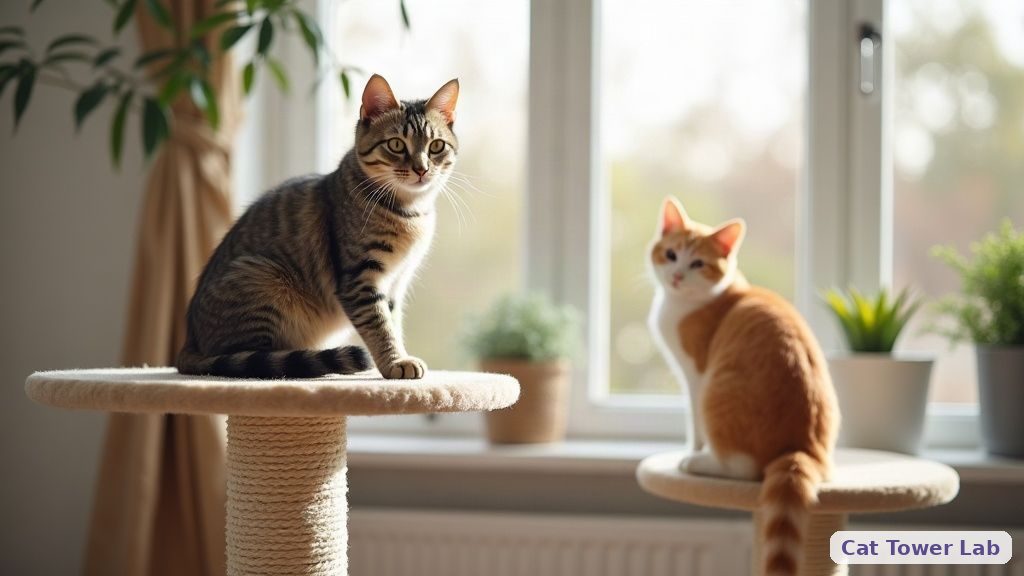
One large cat tree with at least three elevated perches is usually enough for two cats. But if your cats show any signs of resource guarding or territorial tension, a second tree—or additional vertical space elsewhere in the home—becomes necessary.
Here’s how to assess whether one tree is sufficient and when you need to expand.
The perch math: minimum one perch per cat plus one
The American Association of Feline Practitioners environmental needs guidelines recommend “one resource per cat plus one” for litter boxes, food stations, and resting areas. The same principle applies to elevated perches.
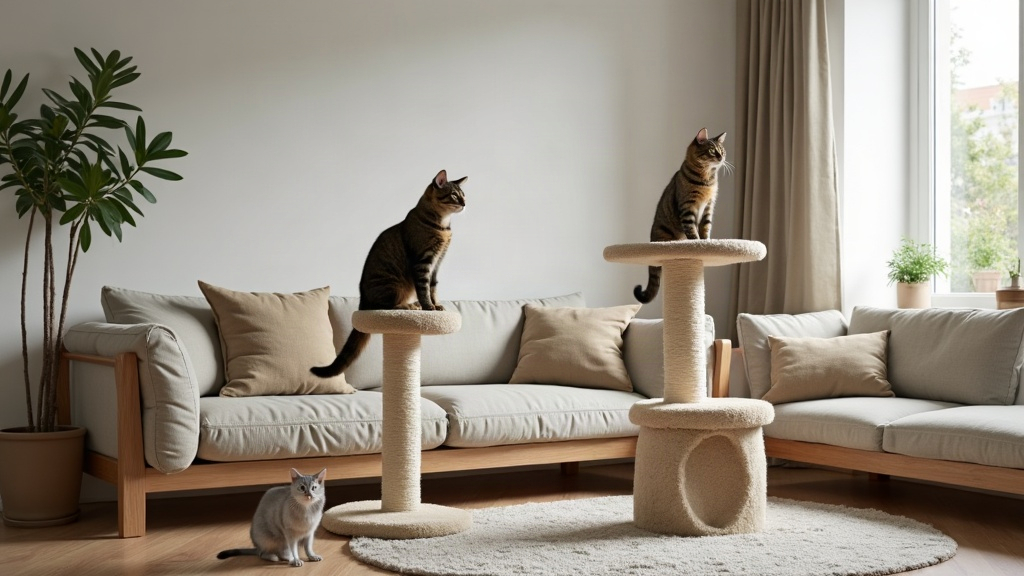
For two cats, aim for at least three usable perches on a single tree—or distribute perches across multiple locations. “Usable” means a platform, condo, or hammock large enough for a cat to rest comfortably, not just a small step between levels.
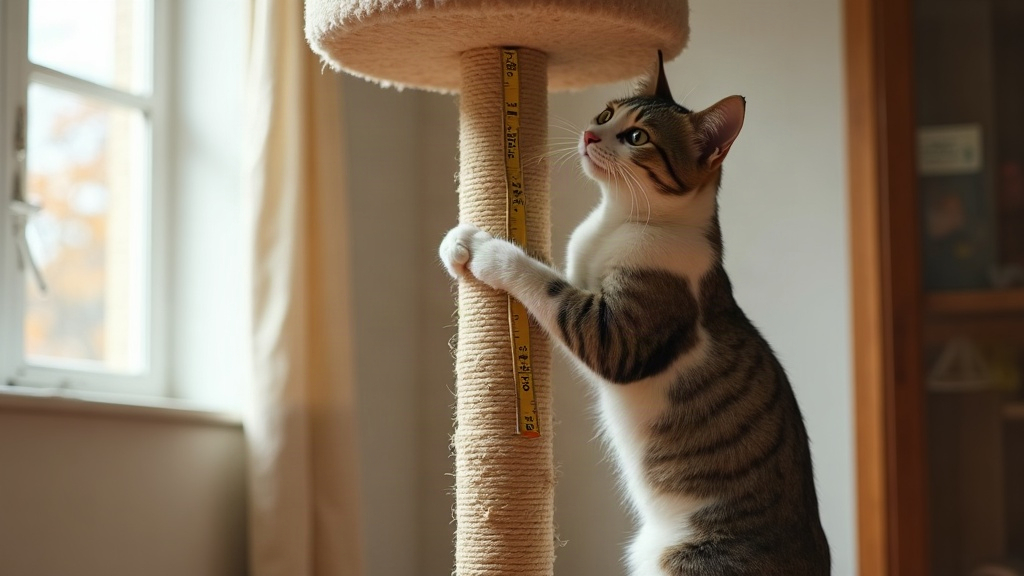
A typical 72-inch cat tree with five or more platforms satisfies this requirement on paper. In practice, you also need to observe whether both cats actually use the tree simultaneously.
Signs one tree isn’t enough
Watch for these behaviors indicating territorial pressure on vertical space:
- One cat monopolizes the tree. They sit at the top and the other cat avoids the tree entirely.
- Stare-downs on approach. When cat B approaches, cat A freezes and stares—this is a low-level block.
- Ambush behavior. One cat waits at the base or on a mid-level to swat the other during climbing.
- One cat never on high surfaces. If one cat consistently stays at floor level while the other is always elevated, the lower cat may be territorially excluded, not just naturally a “bush dweller.”
According to Jackson Galaxy in Total Cat Mojo, cats establish vertical hierarchies. The cat who controls the highest point often controls access to the entire structure. If you observe guarding, adding a second tree in a different room gives the subordinate cat an escape and territory of their own.
When one tree works
Two cats can share a single tree harmoniously when:
- They’re bonded (littermates, long-time companions, or mutually affiliative).
- The tree has enough platforms that both cats can perch without being within swatting distance.
- There’s no observed guarding—both cats use the tree at different times or together without tension.
- Other vertical options exist (cat shelves, windowsills, furniture they’re allowed on).
Bonded pairs often co-perch on the same platform or adjacent levels. If you see this, one tree is working.
Tree placement matters more than tree count
Two trees in the same room corner offer less territorial relief than one tree in the living room and one in the bedroom. Cats divide territory spatially—separate rooms mean separate territory.
If your cats have distinct preferred zones (one sleeps in the bedroom, one in the living room), place trees in both zones. Even a small tree in the secondary zone is better than concentrating all vertical space in one location.
The Ohio State University Indoor Cat Initiative recommends environmental enrichment that spreads resources across the home rather than clustering them.
Space-efficient alternatives to a second tree
If floor space is limited, consider:
- Wall-mounted shelves in a second room—these provide vertical territory without floor footprint.
- A window perch with suction-cup mounting—gives the second cat high ground near a window.
- A tall bookshelf with a cleared top shelf—if sturdy and cat-safe, this counts as elevated territory.
The goal is giving each cat access to elevated resting spots where they feel secure without competing for the same structure.
For compact options, see our cat towers for small apartments guide.
Multi-cat tree features that reduce conflict
If sticking with one tree for two cats, prioritize:
- Multiple entry/exit points. Trees where the only way up is through a lower cat’s perch create ambush opportunities. Multiple routes let a cat escape without confrontation.
- Wide platforms. Two cats can share a 20-inch platform; they cannot share a 12-inch platform.
- Visual barriers. Condos and cubbies break line-of-sight, reducing stare-down standoffs.
- Stable base. Wobbly trees become contested when two cats are on them simultaneously—stability prevents negative associations.
Our cat tree for multiple cats guide covers designs optimized for multi-cat households.
Bottom line
Start with one quality multi-perch tree and observe. If both cats use it without tension, you’re set. If one cat dominates or blocks, add a second tree or wall shelves in a different zone. The principle is simple: vertical space should be abundant enough that no cat needs to compete for it.
Sources
- American Association of Feline Practitioners: Environmental Needs Guidelines — Resource-per-cat recommendations
- Jackson Galaxy: Total Cat Mojo — Vertical hierarchy and territorial behavior
- Ohio State University Indoor Cat Initiative — Environmental enrichment principles