How to Move a Cat Tree Without Your Cat Losing Interest
As an Amazon Associate I earn from qualifying purchases. Product details may change; verify on Amazon before purchase.
🔍 How this guide was put together (Editorial Standards)
This guide compares options using published manufacturer specifications, patterns in publicly visible owner reviews, and reputable expert sources. We do not operate a physical testing lab; see our how-we-research page for details.
📑 Table of contents
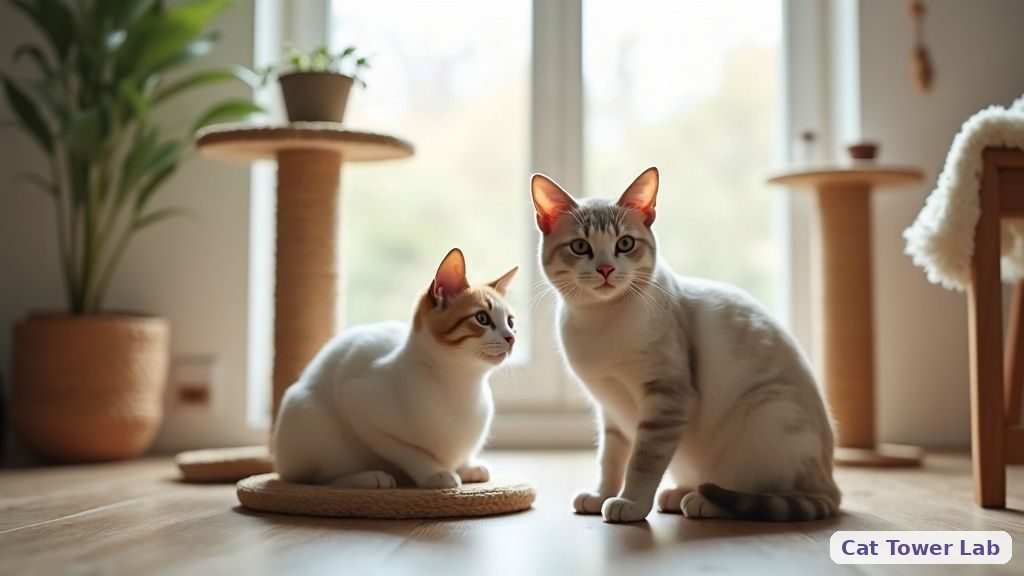
Cats form territorial attachments to their vertical spaces. Moving a cat tree even six feet across a room can cause temporary rejection—the scent profile changes, the sightlines shift, and suddenly their favorite perch feels unfamiliar. Here’s how to relocate while minimizing disruption.
Why Cats Stop Using Moved Cat Trees
According to Jackson Galaxy, cat behaviorist and author of Total Cat Mojo, cats experience their territory in three dimensions. A cat tree isn’t just furniture—it’s a scent-soaked command post where they:
- Deposit facial pheromones (by rubbing)
- Leave claw scent markers (from scratching)
- Establish visual surveillance of their domain
When you move the tree, you’ve relocated their territory. If the new location has worse sightlines, different lighting, or proximity to something stressful (loud appliance, dog bed), they may abandon it.
Moving Within the Same Room
Low-risk moves: Shifting a few feet, same wall, same window access.
- Move the tree during feeding time (cat is distracted)
- Immediately place a treat on each platform
- Don’t clean the tree before or after moving—preserve scent
- Observe: if cat uses it within 24 hours, done
Higher-risk moves: Different wall, loss of window view, new proximity to traffic areas.
- Move incrementally—2-3 feet per day over several days
- Each time you move it, rub a cloth on your cat’s cheeks, then rub that cloth on the tree platforms
- Add fresh catnip to the base scratching area
- Play with your cat ON the tree using a wand toy to create positive association
✅
Scent is everythingThe Cornell Feline Health Center notes that cats rely heavily on scent marking to feel secure in their environment. A "clean" tree in a new spot smells like nowhere—not home.
Moving to a New Home
Relocating to a new home is the highest-risk scenario because the entire environment is unfamiliar.
Before You Move
- Do NOT clean the cat tree—the old-home scent is comforting
- Wrap loosely in a sheet from your bed (transfers familiar human scent)
- If possible, place the tree last into the moving truck so it comes out first
First Day in New Home
- Set up the cat tree in the room you’ve designated as your cat’s safe zone (typically a bedroom)
- Position near a window if possible
- Don’t unpack everything else in that room first—let the tree be the prominent familiar object
- Place food and water near (not under) the tree
- Keep your cat in this room with door closed for 24-72 hours while they acclimate
Gradual Territory Expansion
- After your cat is eating and using the litter box normally, open the door
- Let them explore on their own schedule
- Once they’ve claimed more of the house, you can move the tree to its permanent location
- Use the incremental move technique above if the final spot is far from the safe room
Placement Principles for the New Spot
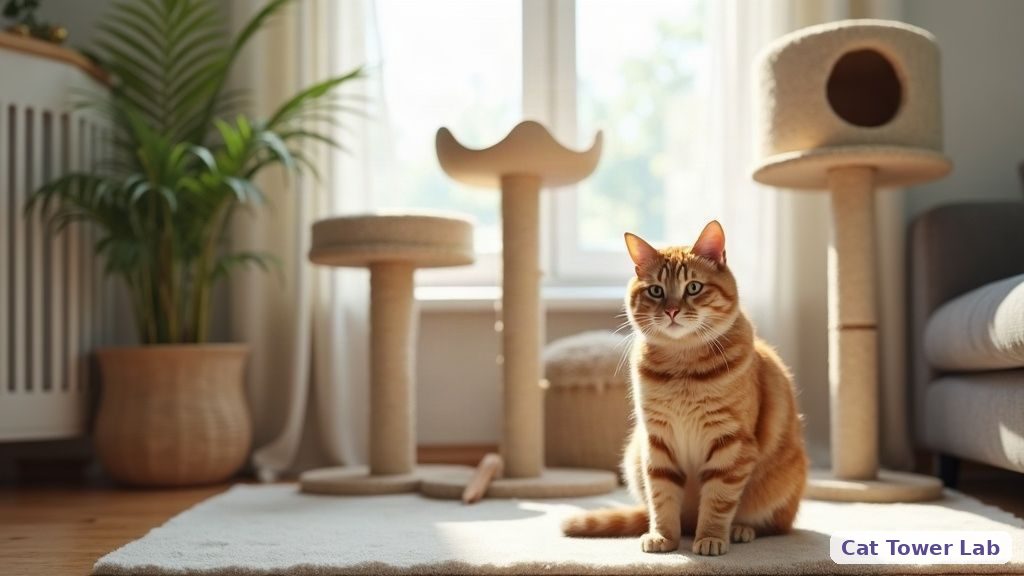
According to the ASPCA, vertical space helps cats feel secure because they can survey their territory from above. The ideal cat tree placement:
| Factor | Good | Avoid |
|---|---|---|
| Window access | Near window with outdoor view | Interior room with no natural light |
| Traffic patterns | Visible from main living area | Isolated corner they never see you |
| Noise | Quiet area | Next to washing machine, loud TV |
| Other pets | Accessible escape routes | Cornered by dog’s favorite spot |
| Temperature | Sunny spot or near heat | Cold drafts, direct AC blower |
See our complete guide on where to place a cat tree for detailed positioning advice.
Troubleshooting: Cat Still Ignores the Tree
Try these in order:
- Catnip refresh: Sprinkle dried catnip on platforms and rub into sisal posts
- Feliway spray: Synthetic pheromone that mimics cat facial marking—spray on tree, wait 15 min before allowing cat access
- Interactive play: Use a wand toy to lure them onto the tree daily for a week
- Treat training: Place high-value treats (small bits of chicken, freeze-dried fish) on each level
- Reduce competition: If you have multiple cats, ensure there are enough vertical spaces—one tree per cat plus one extra
If nothing works after 2 weeks: The location likely has a problem you’re not perceiving (ultrasonic noise from electronics, airflow your cat dislikes, sightline to outdoor cats that stress them). Try a completely different room.
Moving a Wall-Anchored Cat Tree
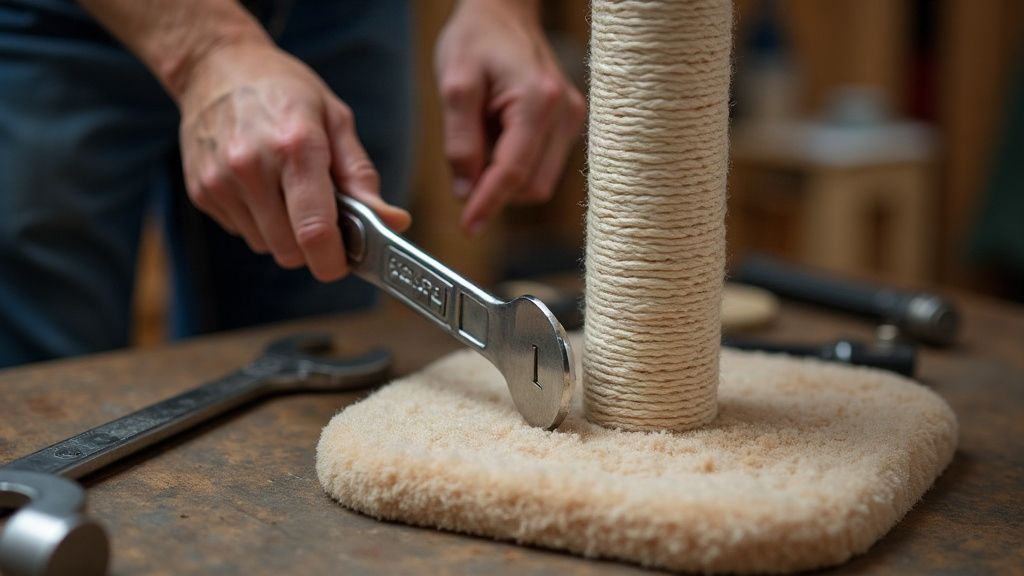
If your tree was secured to the wall (which it should be if over 60”), plan ahead:
- Patch the old anchor holes (spackle + paint)
- Locate studs in the new spot before moving
- Re-anchor immediately after placing—don’t leave a tall tree unsecured, even temporarily
- Use the same anchor hardware or replace if worn
See our guide on how to secure a cat tree to the wall for detailed anchoring instructions.
FAQ
How long does it take a cat to accept a moved tree? Most cats resume use within 1-3 days if scent is preserved and location is good. Some need up to 2 weeks for major moves.
Should I buy a new tree instead of moving the old one? No—the old tree has years of scent investment. Even a worn tree is more valuable to your cat than a brand-new one.
My cat climbs the tree but won’t sleep on it anymore—why? Sleeping requires peak comfort and security. The new location may be too exposed, too cold, or lack sunlight. Add a warming pad or move closer to a sunny window.
Can I move the tree while my cat is on it? Not recommended. Cats don’t like being moved on furniture—it feels unstable and threatening.
Related: Where to Place a Cat Tree · Why Cat Ignores Cat Tree