Should I Buy a Cat Tree With a Condo or Open Perches?
As an Amazon Associate I earn from qualifying purchases. Product details may change; verify on Amazon before purchase.
🔍 How this guide was put together (Editorial Standards)
This guide compares options using published manufacturer specifications, patterns in publicly visible owner reviews, and reputable expert sources. We do not operate a physical testing lab; see our how-we-research page for details.
📑 Table of contents
Short answer: Most cats prefer open perches for daytime use and will only use condos if they feel stressed or cold. But shy cats, cats in multi-pet homes, and cats in loud households may choose condos consistently. Here’s how to decide.
Open Perches vs Enclosed Condos
| Feature | Open Perch | Enclosed Condo |
|---|---|---|
| Visibility | 360° view | Limited (1-2 openings) |
| Airflow | Full | Restricted |
| Escape routes | All directions | 1-2 exits |
| Best for | Confident cats, surveillance | Shy cats, hiding |
| Common use | Daily observation | Stress refuge, sleep |
Why Most Cats Prefer Open Perches
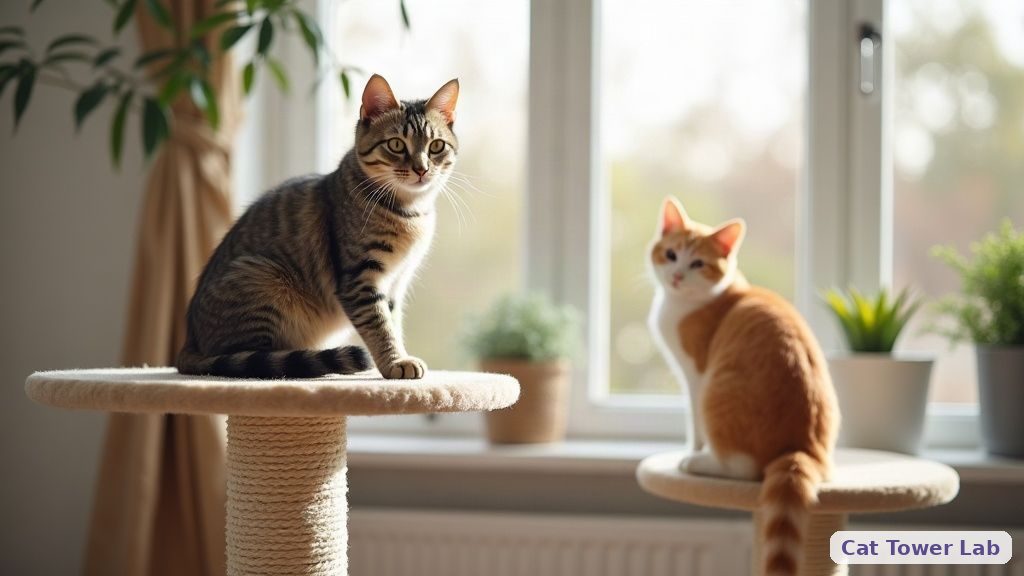
According to Jackson Galaxy, the “cat mojo” concept centers on confidence—and confident cats want to see everything. An open perch provides:
- Surveillance: Cats are ambush predators. They watch movement, track potential prey (toys, bugs, your feet), and monitor household activity.
- Temperature regulation: Open platforms allow airflow. Cats run warmer than humans (100.5-102.5°F body temp) and can overheat in enclosed spaces.
- Quick escape: A cat on an open platform can jump in any direction. A cat in a condo has limited exit options—which feels vulnerable.
This is why you’ll often see cats sleep on top of a condo rather than inside it.
✅
Observe your cat's current behaviorIf your cat sleeps in open spaces (bed, couch, floor patches of sun), they'll prefer open perches. If they hide under furniture or in closets, they may use condos.
When Condos Are Valuable
Multi-Cat Households
In homes with social tension between cats, enclosed spaces provide refuge. The Cornell Feline Health Center notes that cats in multi-cat households need hiding spots to reduce stress. A condo allows:
- Visual break from other cats
- Defensible space (they can guard the entrance)
- Reduced conflict over perch positioning
Rule of thumb: In multi-cat homes, you want both—open perches for the confident cats, condo hideaways for the subordinate ones.
Shy or Anxious Cats
Some cats are naturally cautious (prey mentality dominant over predator). Signs your cat may prefer condos:
- Hides when visitors arrive
- Startles at loud noises
- Prefers small, enclosed sleeping spots
- Was recently adopted and is still acclimating
Loud or Chaotic Homes
Children, dogs, frequent visitors, loud TVs—all of these make open perches feel exposed. Cats in busy homes often retreat to condos during peak activity, then emerge when the house quiets.
Cold Climates
Condos trap body heat. In winter or in air-conditioned homes, cats may choose enclosed spaces for warmth. You can amplify this by adding a heating pad inside the condo (use pet-safe models only).
Condo Problems: Size and Escape
Most cat tree condos are designed for average-sized cats (8-12 lbs). Problems emerge with:
Large cats (Maine Coons, Ragdolls, big domestic shorthairs):
- Condos are too small to fit comfortably
- Entry holes are too narrow
- Cats give up trying and never use the condo
Solution: If you have a large cat, look for condos with at least 15” interior diameter and entry holes 7”+ wide. Or skip condos entirely and choose open hammocks (which conform to body size).
Single-exit condos:
- Cats feel trapped if another cat/pet blocks the entrance
- Nervous cats won’t enter at all
Solution: Choose condos with 2 openings (front + back, or front + top) so cats can escape if needed.
See our cat trees with condos article for picks with properly-sized enclosures.
Hybrid Designs: Best of Both
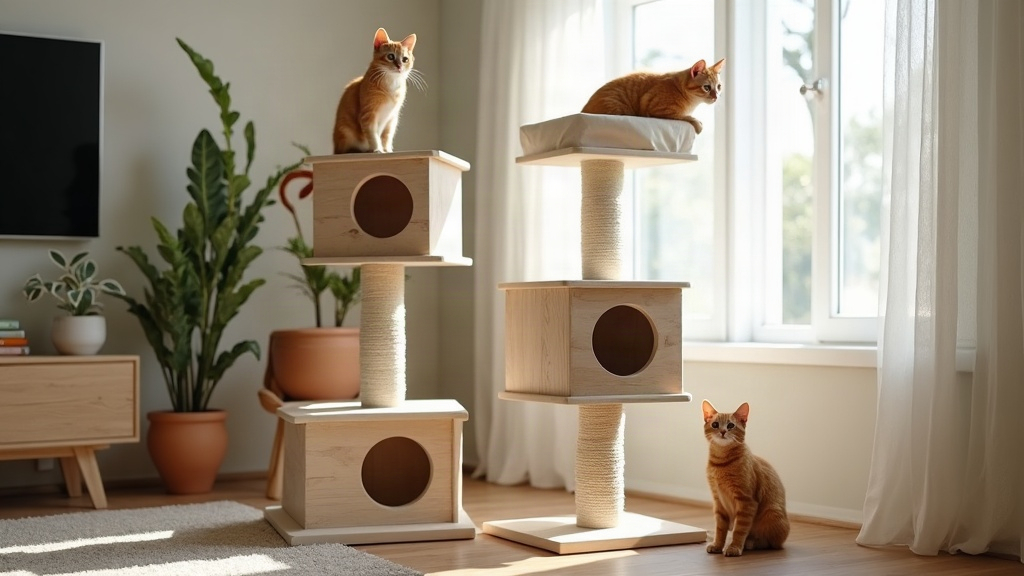
The most versatile cat trees offer:
- 2-3 open perches at different heights
- 1 condo (mid-level, not top level—cats want the top spot open)
- 1 hammock (enclosed feeling without full walls)
This setup lets cats choose based on mood, temperature, and household activity level.
Perch placement hierarchy:
- Top perch = always open (this is the surveillance spot)
- Mid-level = condo or hammock (refuge option)
- Lower levels = open platforms (stepping stones, scratching access)
What About Hammocks?
Hammocks are a middle ground—they curve around the cat’s body (cozy, enclosed feeling) but remain open to airflow and visibility.
| Feature | Hammock | Condo |
|---|---|---|
| Visibility | Good | Poor |
| Warmth | Moderate | High |
| Escape | Easy | Restricted |
| Size flexibility | Conforms to body | Fixed dimensions |
Many cats who reject condos will use hammocks. They’re especially good for large cats who don’t fit standard condos.
See our cat trees with hammocks guide for options.
Decision Framework
Choose mostly open perches if:
- Your cat is confident and outgoing
- Single-cat household
- Your cat currently sleeps in open areas
- You have a large breed cat
- Your home is quiet
Choose a tree with a condo if:
- Your cat is shy or recently adopted
- Multi-cat or multi-pet household
- Noisy home (kids, dogs, TV always on)
- Your cat currently hides under furniture
- You live in a cold climate
Choose a hybrid if:
- You’re not sure yet
- You want options for different moods
- Multi-cat home with cats of different personalities
FAQ
My cat never uses the condo—waste of space? Common. Many cats only use condos during stressful events (fireworks, visitors, new pet). The condo’s value is as an option, not daily furniture. You can repurpose it by storing toys inside.
Can I remove the condo to make the tree lighter? Sometimes. Check if the condo is structural (some designs use it to connect posts). If it’s just attached to a platform, you can remove it and have an open tree.
My cat sleeps inside the condo in summer—is she overheating? Possibly. Provide an alternative (open perch, hammock) and ensure fresh water is always available. If she’s panting, move her to a cooler spot.
Do kittens prefer condos? Kittens often nap in condos but play on open perches. Their preference may shift as they mature and gain confidence.
My large cat broke the condo entrance trying to squeeze in—help? Replace with a tree designed for large cats (entry holes 7”+, condos 15”+ diameter). Or remove the condo entirely and add a hammock rated for higher weight capacity.
Related: Cat Trees With Hammocks · Cat Trees With Condos